
Dairy Cattle
What is veal?
Veal is the meat from a younger animal of either a dairy breed, dairy crossbreed or beef breed.
Is permanently housing dairy cows indoors an animal welfare issue?
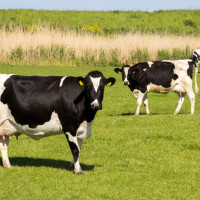
There are over 1. 4 million dairy cows in Australia. On average, each cow produces close to 6,170 litres of milk a year.
Why are calves separated from their mother in the dairy industry?
For cows to produce milk, they have to give birth to a calf. Standard dairy industry practice is to separate calves within 24 hours of birth. This is done to reduce the risk of disease transmission to the calf (e. g.
Is group housing preferable to individual housing of dairy calves?
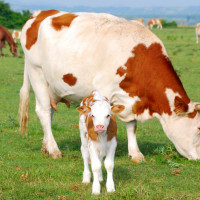
Calves born in a natural environment will begin interacting with each other at around 1-2 weeks of age when the dam (mother) will leave their calf with a group of other calves and graze nearby.
How do young calves cope with transport?
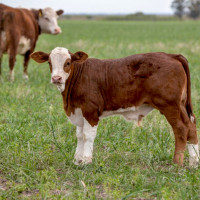
Calves are legally able to be transported at 5 days old or, if transported directly to a calf-rearing facility, at less than 5 days old.
How much milk should dairy calves be fed?
Common dairy industry practice is to feed unweaned calves around 10% of calf body weight in milk daily.
What are some of the painful procedures experienced by cattle on farm?
RSPCA defines a painful farm animal husbandry procedure as any action that alters or removes a specific body part of a farm animal and causes pain, suffering or distress. Any procedure that results in tissue injury should be assumed to cause pain, and therefore must be approached accordingly.
Why is colostrum feeding important for calves?
Colostrum is a fluid produced by the pregnant cow prior to giving birth to her calf in readiness for the calf at first suckling. Calves are born with little to no immunity and colostrum provides the calf with antibodies that protect it from infectious diseases.
Why are the tails of dairy cows docked?
Routine tail docking of up to two-thirds of the cow’s tail at 12-18 months old, was adopted by some dairy farmers mainly for the benefit of the milker but also in the belief that tail docking reduces the risk of mastitis, improves milk quality, leaves udders cleaner and reduces fly…
What is teat clipping in dairy calves and goats?
Dairy calves and dairy goat kids may be born with extra teats on the udder, called supernumerary teats. These extra teats are non-functional and not harmful but may leak during milking or, occasionally, become infected. In the dairy industry, supernumerary teats are usually removed.