

Wild Animals
Articles within this category
How can climate change affect animal welfare?
RSPCA Australia acknowledges that there is scientific consensus that climate change is caused by greenhouse gas emissions from human activities including electricity generation, agriculture (including livestock farming), industry, waste, and land use. Climate change can have a negative effect on animal health and welfare directly (e. g.
Why do some recreational hunters use a bow and arrow and is this type of hunting humane?
Some hunters use a bow and arrow to hunt animals because they consider it to be an ‘art’ or challenge that requires skill and patience. However, from an animal welfare perspective it results in significant pain and suffering.
Is mange in wombats a serious welfare issue?
Mange is a parasitic skin infestation which, if left untreated, can cause crusting, bleeding and intense irritation. In wombats and other animals, including humans, it is caused by Sarcoptes mites, which are microscopic insects that burrow into the skin.
At what stage of development do animals become sentient?
Animal sentience is the capacity of an animal to experience different feelings such as suffering or pleasure.
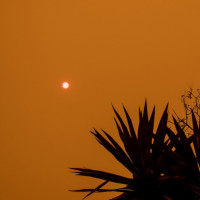
How can I minimise the impact of bushfire smoke on my animals?
Bushfires can lead to persistent smoke and related air pollution and this can cause serious negative effects and health problems for animals, just as it can in people. However, there are measures you can take to minimise these impacts.
What are the animal welfare (and environmental) issues with the production of palm oil?
Palm oil is a cheap, versatile and very popular vegetable oil. However, its large-scale production has caused a devastating impact on wildlife and the environment.
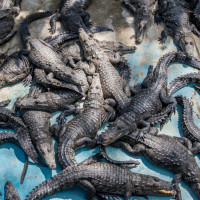
What is the RSPCA’s view on crocodile farming?
The way in which crocodiles are farmed for skins and meat results in a number of welfare concerns including confinement, which prevents crocodiles from being able to fully exercise freely and satisfy their behavioural, social and physiological needs.
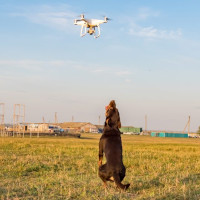
What are the effects of drones on horses, farm animals and wildlife?
The use of drones is becoming increasingly common in farming, conservation work and wildlife research. They allow people to monitor animals and the environment over large areas quickly, safely and without physically approaching animals.