

What are the effects of drones on horses, farm animals and wildlife?
The use of drones is becoming increasingly common in farming, conservation work and wildlife research. They allow people to monitor animals and the environment over large areas quickly, safely and without physically approaching animals. While drones can offer major benefits—such as improved welfare monitoring, early problem detection and safer working conditions—they can also disturb or frighten animals. Some species react to drone noise or movement by becoming alert, moving away or other changes in their behaviour. There are many factors that can influence the impact of drones, including the species of animal, their life stage, changing environments, and technological advances in the development of new drones. Responsible use is therefore essential wherever animals may be affected.
Uses of drones for farm animals and wildlife
Drones have the potential to be a valuable tool on farms for enhancing management and improving the overall welfare of animals. For instance, drones make it possible to monitor animals across large or remote paddocks, which could allow for early detection of injuries and observation of calving and lambing. Drones combined with artificial intelligence (AI) technology can also be used to automate routine tasks such as checking fences, water supply, and pasture growth, although manual inspection is still often required to ensure accuracy while fine-tuning the AI programming [1]. In remote pastoral regions, drones are also being developed for mustering farm animals. This has the potential to improve efficiency by reducing fuel use, vehicle wear, labour requirements for farm management as well as reducing stress on farm animals relative to conventional mustering methods [2]. In addition, horses in paddocks may also be subjected to drones for monitoring or grazing management or in proximity of where other animals are being monitored. Drones are also being increasingly used to promote horse events, such as cross country and show jumping, on social media.
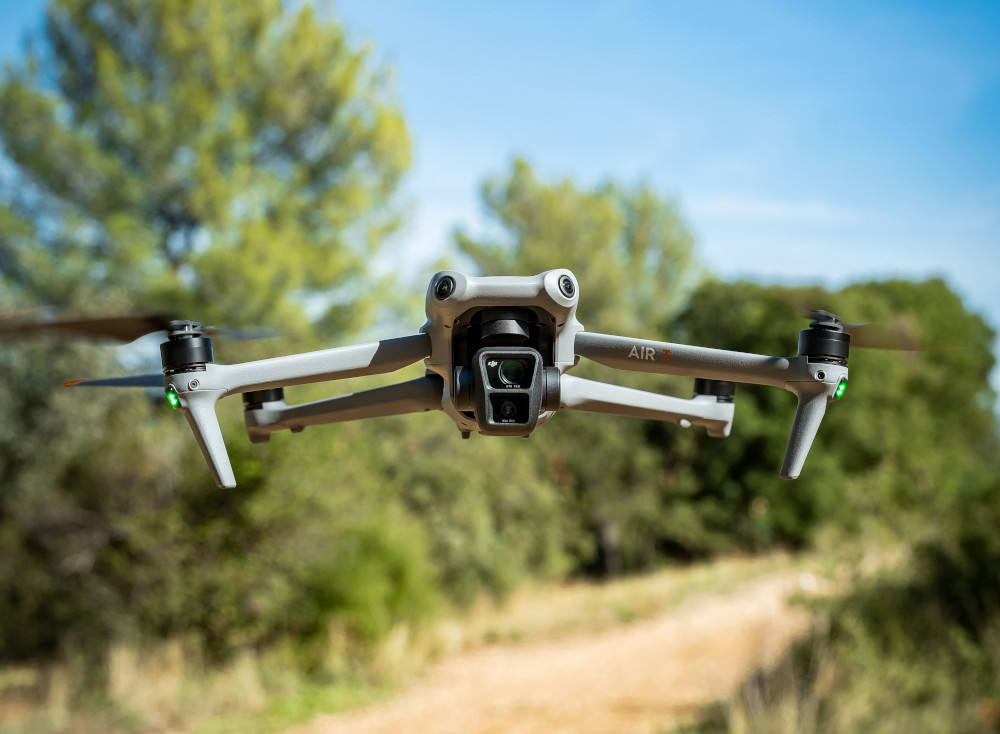
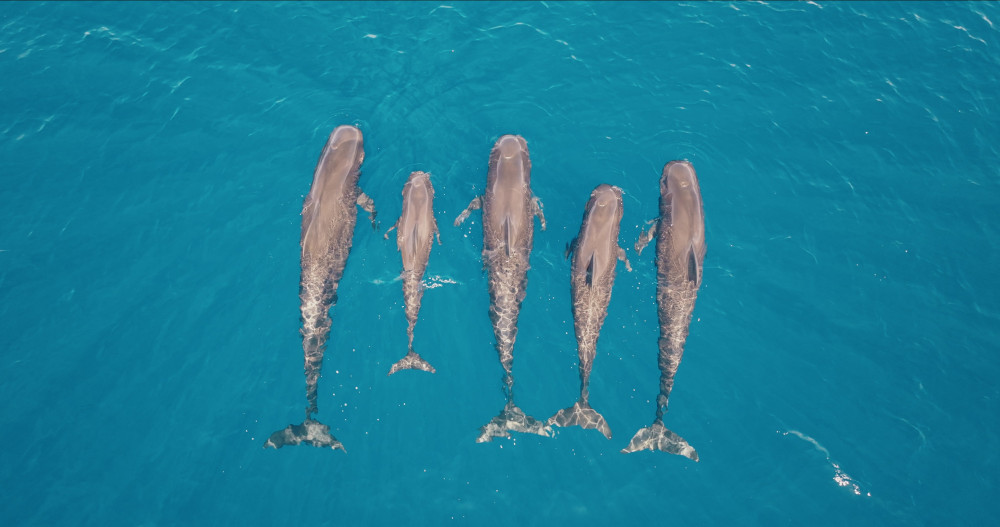
In wildlife conservation, drones are transforming how researchers monitor animals and their environments. Conservation programs have used drones to support threatened species management by mapping remote and challenging habitats, observing wildlife behaviour, and monitoring outcomes such as survival [3]. Drones fitted with microphones can capture audio data from bats, birds and whales [4]. Thermal cameras help locate cryptic species such as koalas hidden high in forest canopies, making population surveys more accurate and efficient. For instance, the NSW Wildlife Drone Hub is working with the NSW Koala Strategy to refine survey methods using drones across different forest types, terrain and koala population densities [5]. Drones have also been used to observe whales, dolphins and seals from above, which reduces the need for close vessel approaches that can disturb animals [6]. Aerial footage provides detailed information about feeding, social behaviour and the health of mother–calf pairs while keeping a safe distance. Drones have also been used to capture whale blow to monitor health indicators [7].
Potential negative effects of drones on farm and wild animals
Despite the potential benefits of drones for farming efficiency and animal welfare, there are also some potential negative impacts that need to be considered. A Japanese study found that 23% of cows displayed a startle response on the first day that the drones were used but over subsequent exposure this declined [8]. Where horses are exposed to drones this may pose a risk. One North American study found horses exposed to a drone showed reduced grazing and evidence of evasive movement and vigilance [9]. The authors concluded that drones may cause fear induced impaired foraging which could have negative impacts on health.
Animals respond differently to drones depending on species, flight height, noise level and the way the drone approaches [10]. Birds are often sensitive to low flights and may react strongly when drones fly close to nesting areas [10]. Similar sensitivity observed in wild birds is also likely to occur in pet birds housed in outdoor aviaries. Terrestrial animals, such as kangaroos, may become alert or flee if drones pass overhead at low altitude [10]. A North American study found that monitored black bears showed a stress response but did not display expected associated behaviours highlighting that a lack of behavioural response may not indicate that animals are not negatively affected [11]. Marine life also show varied responses: dolphins may react to close drone flights, while whales often show little behavioural change, especially when noise levels are low [6]. When using drones to monitor a particular species, it is essential to monitor other species for adverse impacts. For example, if one arboreal animal species is being observed, then impacts on other species including nesting birds must also be monitored and action taken where negative impacts are detected.
Strategies to reduce impacts on wildlife
Based on studies, different research groups have made recommendations to minimise negative impacts of drones on animals [12,13], including:
- Utilise drones with low noise production and size.
- Anyone using drones should exercise caution to minimise disturbance of wildlife, particularly where endangered species or ecologically sensitive habitats are involved – ideally have experienced pilots fly near wildlife to minimise risk and flight time required.
- Avoid flying near nesting or breeding wildlife, especially bird colonies.
- Avoid moving directly toward the animal as it may mimic a predator’s movement. Launch and land drones at least 100m from animals and fly at a reasonable altitude and distance from animals at all times. Wherever possible, expert advice should be obtained if there is no research available for a given species’ response to drones and thus what is a reasonable distance to fly from the animal to minimise potential disturbance
- Operators should avoid descending directly over animals and instead move slowly and steadily from the side.
- Monitor animal responses to the drone and cease flying if they become excessively disturbed.
- Seek approval from institutional ethics committees before using drones for research purposes near animals.
- When conducting studies around animals with drones, the exact flight practices such as altitude and distance from animals and the responses of the animals should be reported as part of the study to assist future research and regulations.
In addition, Australia's Civil Aviation Safety Authority (CASA) rules and regulations govern the use of drones [14]. For instance, pilots must keep their drone within visual line of sight, fly only in daylight and stay below 120 meters. Drones must remain at least 30 meters from people and must never fly over crowds, roads or buildings in a way that could endanger anyone. Flying in restricted or prohibited airspace — including near airports — is not allowed without approval. These rules apply whether the drone is for recreation, farming, or commercial work.
Many states and territories also have additional restrictions in national parks and reserves. For instance, NSW requires approval to launch, land or operate a drone within a national park for recreational purposes, while Queensland requires a permit for drones more than two kilograms in size, or if used for commercial or research purposes. Before flying, users should always check local park regulations, temporary restrictions and airspace conditions to ensure both safety and animal welfare are protected.
References
Yousefi DBM, Rafie ASM, Al-Haddad SAR, Azrad S (2022) A systematic literature review on the use of deep learning in precision livestock detection and localization using unmanned aerial vehicles. IEEE Access 10:80071-80091
Hartman S, Trinh K, Flick P, Kuhnert P (2025) Shaping the future of artificial intelligence technology development for the Australian agricultural sector. Farm Pol J 22(1):12
Saunders D, Nguyen H, Cowen S, Magrath M, Marsh K, Bell S, Bobruk J (2022) Radio-tracking wildlife with drones: a viewshed analysis quantifying survey coverage across diverse landscapes. Wildl Res 49:1-10
Pedrazzi L, Naik H, Sandbrook C, Lurgi M, Fürtbauer I, King AJ (2025) Advancing animal behaviour research using drone technology. Ani Behav 222:123147
NSW Government, Environment and Heritage (2025) NSW Wildlife Drone Hub: The NSW Wildlife Drone Hub connects wildlife managers with emerging drone technology.
Christiansen F, Nielsen MLK, Charlton C, Bejder L, Madsen PT (2020) Southern right whales show no behavioral response to low noise levels from a nearby unmanned aerial vehicle. Mar Mamm Sci 36:953-963
Pirotta V, Smith A, Ostrowski M, Russell D, Jonsen ID, Grech A, Harcourt R (2017) An economical custom-built drone for assessing whale health. Front. Mar. Sci. 4:425
Anzai H, Kumaishi M (2023) Effects of continuous drone herding on behavioral response and spatial distribution of grazing cattle. Appl Ani Behav Sci 268:106089
Howell RG, Draughon k, Johnston H et al. (2022) Evaluating changes in horse behaviour as a response to small unmanned aerial vehicles. Rangelands 44(2):121-128
Afridi S, Laporte-Devylder L, Maalouf G, Kline JM, Penny SG, Hlebowicz K, Cawthorne D, Lundquist UPS (2025) Impact of drone disturbances on wildlife: a review. Drones 9(4):311
Ditmar MA, Vincent JB, Werden LK et al. (2015) Bears show a physiological but limited behavioral response to unmanned aerial vehicles. Current Biol 25(17):2278-2283
Duporge I, Spiegel MP, Thomson ER, Chapman T, Lamberth C, Pond C, Macdonald DW, Wang T, Klinck H (2021) Determination of optimal flight altitude to minimise acoustic drone disturbance to wildlife using species audiograms. Methods Ecol Evol 12(11):2196-2207
Vas E, Lescroël A, Duriez O, Bogdanova MI, Grémillet D (2015) Approaching birds with drones: first experiments and ethical guidelines. Biol Lett 11(2):20140754
Australian Government, Civil Aviation Safety Authority. Drone Rules.
Was this article helpful?

This work is licensed under a Creative Commons Attribution-NonCommercial-NoDerivatives 4.0 International License.