

Articles tagged with 'Animal behaviour'

How do I stop a neighbour’s cat from entering and toileting in my yard?
RSPCA Australia encourages owners to contain of cats within their property boundaries to help protect cats from disease and injury, avoid them becoming lost, reduce the impact on wildlife, and prevent disturbance to neighbours. Welfare check First, assess if the cat is owned (e. g.
What can I do if my dog is anxious when I’m not at home?
Dogs are highly social animals who generally prefer to live in groups. Many dogs can become anxious when separated from their human family.
What is the RSPCA’s view on dominance dog training?
Many of the assumptions that form the basis of dominance dog training are flawed and are often harmful to dogs and the human-animal bond.
How can I use environmental enrichment to provide opportunities for my ferrets to experience good welfare?
What is environmental enrichment? Environmental enrichment describes the provision of physical and social opportunities to promote ferret behaviour that is important, valuable, and specific to them.
How can free-range layer hens be encouraged to use the range area?
Hens’ use of the outdoor range area in free-range housing systems is dependent on multiple factors.

One of my cats has died, should I get a companion for my remaining cat?
Losing a member of the family is difficult, both for human and non-human members of the household. It has been suggested that cats experience symptoms consistent with grief (e. g.
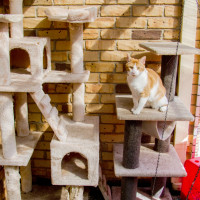
Why does my cat scratch the furniture?
Cats naturally perform scratching behaviour for a variety of reasons, such as to maintain their claws, mark territory (cats deposit scent when they scratch as they have scent glands around their paw pads), and as an emotional outlet (e. g. , frustration, anxiety, excitement).
My dog is being aggressive, what should I do?
Aggression is defined as a threat, challenge or attack that is directed towards one or more individuals. Signs of aggression may be visual (changes in body posture, piloerection – hair raises up) and auditory (growling, barking) and may involve the use of teeth and occasionally claws.

What is reward-based dog training and why does the RSPCA support it?
The RSPCA believes that dogs should be trained using programs that are designed to facilitate the development and maintenance of acceptable behaviours using natural instincts and positive reinforcement.
Should pet greyhounds have to wear muzzles?
In some Australian jurisdictions, there is a compulsory requirement for pet greyhounds to wear a muzzle in public. Greyhound muzzling laws are based on ‘breed’ not on individual dog behaviour and are an example of breed-specific legislation (BSL).