

What can be done about wildlife vehicle collisions?
Wildlife vehicle collisions (or ‘wildlife roadstrikes’) are a serious problem that cause significant adverse animal welfare impacts, conservation concerns and human health and safety risks. The majority of reported roadstrike incidents across Australia involve kangaroos, however roadstrike can affect all kinds of animals from birds, reptiles, and amphibians, to non-native species including deer and foxes. Colliding with a vehicle can cause an animal to experience significant fear, pain, distress, injury and in the majority of cases, death. For those animals who do not die immediately, they may experience prolonged suffering with many slowly succumbing to their injuries, starvation, or being attacked and eaten by other animals.
Roadstrike can be a serious risk to vulnerable or threatened wildlife across the country. It is estimated that at least 10 million wild animals are hit on roads across Australia every year [1]. A study in New South Wales estimated that over an average summer, more than 40,000 frogs are killed along a 4km span of road, with two vulnerable frog species (Litoria olongburensis and Crinia tinnula) accounting for 60% of those killed [2]. Motor vehicle collisions are the second most common threat to koalas, with around 300 recorded deaths per year in South-East Queensland [3], and around 350 to 450 endangered Tasmanian Devils are killed on roads every year [4].
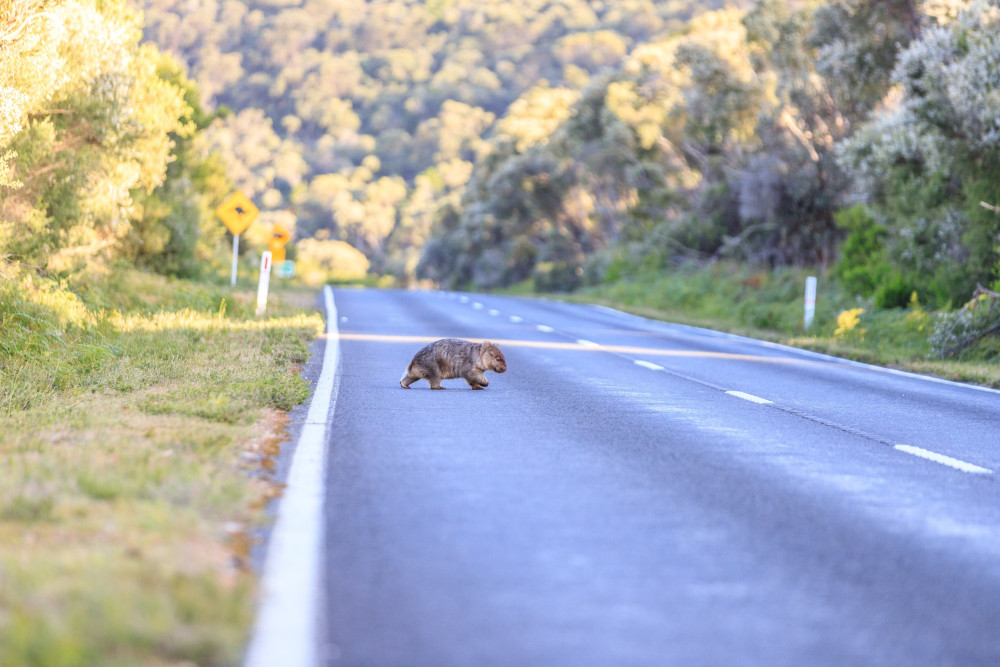
Roads divide the landscape resulting in fragmentation of habitat and creation of barriers to wildlife movement and gene flow [5]. Land clearing and development that causes habitat loss or the degradation of critical resources (e.g., food, water, shelter) for wildlife can exacerbate these impacts, potentially leading to animals moving further afield to find these resources, or drawing animals to remaining roadside vegetation. Unfortunately, drought and bushfires have also been linked to an increase in wildlife vehicle collisions, and this may worsen as extreme weather events occur more frequently due to climate change [6].
Responding to incidents of roadstrike where an animal may be severely injured and in need of help places a substantial emotional and financial burden on wildlife rescuers and carers, with the vast majority being volunteers. Other agencies may also respond or assist with road strike cases, such as police and local councils, and some veterinarians may provide their services free-of-charge to alleviate animal suffering, but this is neither equitable nor sustainable.
Urgent priorities
There is an urgent need for effective solutions to address this complex issue. Solutions will require a cross-sectoral and cross-jurisdictional collaborative approach that considers preventative measures, mitigation strategies, and an effective and coordinated response.
The RSPCA recommends the following actions are prioritised by governments:
Centralise incident reporting for members of the public
Many drivers do not know what to do, or who to call, if they have the unfortunate experience of a wildlife collision, witness one, or see an injured animal on the roadside.
Across Australia, there is a variety of individuals, organisations, and government departments who may respond to a wildlife roadstrike incident, and this varies in each state and territory. Governments should consider developing a fully centralised incident reporting and dispatch system which uses a single phone number or phone application. This will streamline the process for people seeking help for wildlife hit by cars, reduce duplication of rescue efforts, and result in better outcomes for wildlife.
Fund the wildlife care and response sector
It is essential that the wildlife care and rescue sector, including the work of veterinarians, is adequately funded to help safeguard the welfare of wildlife. Responses to wildlife roadstrike incidents must be timely and able to meet appropriate standards of care, which requires people with a high-level of expertise, knowledge and training to be available. Standardising training for anyone involved in the wildlife sector is also a high priority to ensure wildlife welfare, including training for those responding to incidents in best practice euthanasia methods.
Invest in infrastructure and research
Roadside fencing combined with crossing structures that allow wildlife movement over or under roads is the most effective tool to combat roadstrike that is currently available [7]. However, a global assessment of the effectiveness of wildlife crossing structures found that many of these structures are poorly evaluated, and there is a need for species-specific guidelines coupled with thorough evaluation to ensure their use is effective [7]. Research in Australia shows that a range of animal species will use crossing structures, such as underpasses [8], and rope or ladder bridges [9]. Macropods (kangaroos and wallabies) have been found to be regular users of underpasses which is particularly important given their over-representation in roadstrike incidents [8]. However, more research into the site and species-specific design and placement of these structures in the Australian context is required. The use of fencing and crossing structures should not replace planning that avoids the placement of roads through critical wildlife habitat or movement corridors in the first instance.
Another method which has been studied is virtual fencing technology – a roadside device that is activated by oncoming car headlights and emits light and noise to ‘warn’ wildlife of the impending danger. However, to date, there has been insufficient evidence to show that this technology is effective in significantly reducing wildlife deaths [10]. There are promising developments occurring in Australia and globally, that use roadside animal-detection systems linked with ‘smart’ signs to provide real time warnings to oncoming drivers, and further research is being carried out into in-car detection and warning systems. However, there is unlikely to be one solution to this complex problem.
Establish a national reference group
Given the complex nature of this problem and the required expertise, there are many benefits to be gained by establishing a national reference group or centre to bring together jurisdictional road and transport departments, planners, researchers, road ecologists, and wildlife experts, wildlife rescue/carers, and animal welfarists, to harmonise efforts being undertaken in various states and territories. This could include providing guidance for collaborative research into mitigation strategies and solutions, centralising reporting, and sharing knowledge and resources.
Ensure fauna-sensitive development and road design
As parts of Australia engage in high-growth development in areas previously utilised by wildlife, all levels of government must investigate mechanisms to ensure fauna-sensitive development and road design is occurring at a local and landscape level. This includes aligning policy nationally, legislating triggers to require mitigation strategies to be included when impacts cannot be avoided, improving data-sharing and transparency, and investing in research and training for professionals involved in road ecology and road development projects to ensure cross-sectoral knowledge can be applied [11].
Implement some strategies now
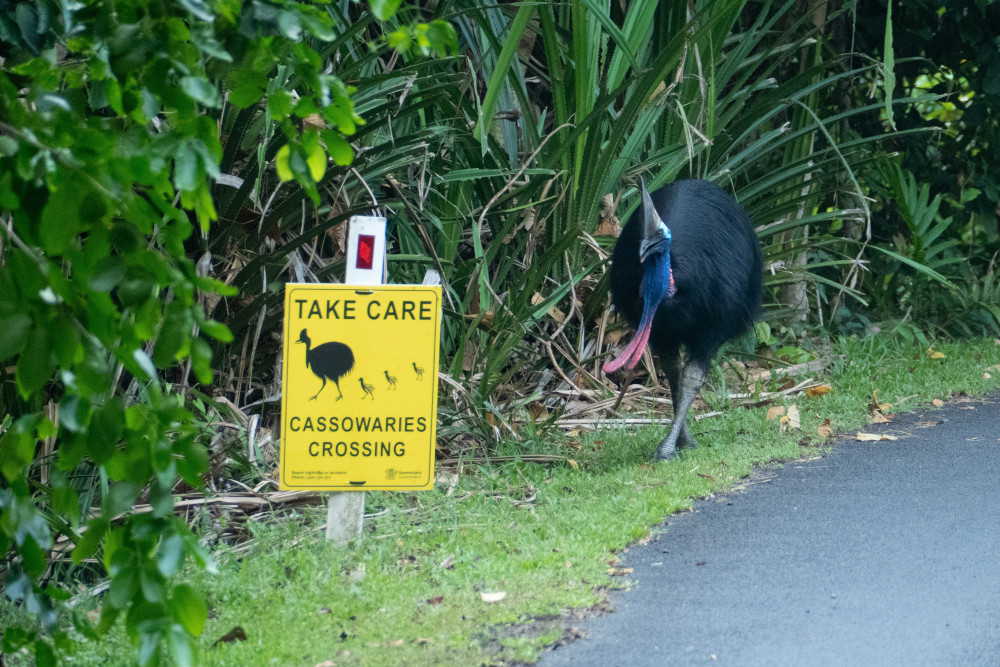
Where fences and crossing structures cannot be implemented and while research continues on emerging technologies, state and territory governments can work with local councils to implement variable message signs in high-risk areas during high-risk periods [12], consider traffic calming measures or ‘slow points’ on roads where appropriate [13], and support scientifically robust trials of new technologies.
Improve public education and awareness
All levels of government should consider implementing public education and awareness campaigns to improve driver awareness of high-risk periods and hotspots, how to respond to mitigation strategies in use (e.g., variable message signage), and what to do if an incident occurs.
Develop a national roadstrike database
Finally, a national, centralised roadstrike database to identify and monitor roadstrike hotspots and mitigation strategies that have been implemented, will be important to direct resources appropriately, inform future mitigation strategies, and ensure that hotspot data is up-to-date and accurate. Monitoring and evaluating mitigation strategies is critical to ensuring resources are appropriately directed toward solutions that work for the target species and site conditions.
How can you help?
The RSPCA recognises wildlife roadstrike as a serious and urgent animal welfare problem that requires national leadership, cross-sectoral and cross-jurisdictional collaboration and significant government investment as well as community engagement and support.
Before getting in your car, we recommend saving wildlife rescue contact numbers in your phone so that you have these on hand when driving, including when visiting other states or territories.
When on the roads:
- Drive cautiously and with wildlife in mind
- Pay attention to wildlife roadside signage
- Reduce speed, particularly when driving at dawn or dusk
- If you see an animal close to the road, slow down, and stop if needed and safe to do so – kangaroos may jump into the path of oncoming vehicles or suddenly change direction
- For your own safety and the safety of others, do not swerve if you cannot stop in time to avoid a collision
- If a collision occurs, pull over if safe to do so, turn your hazard lights on and call 000 if a person is injured. If an animal is injured, call a local wildlife rescue group.
Relevant podcast
References
Englefield B (2020) Influences on and consequences of wildlife vehicle collisions and roadkill in Australia. PhD Thesis. School of Veterinary Science, The University of Sydney.
Goldingay R, Taylor B (2006) How many frogs are killed on a road in North-east New South Wales? Australian Zoologist. 33(3):332–336.
Department of the Environment, Tourism, Science and Innovation (2023) Koala threats and how to help. Queensland Government.
Department of Natural Resources and Environment Tasmania (2024) Tasmanian Devil Roadkill Project. Accessed 19 Sept. 2025.
Goldingay R, Taylor B (2009) Roads and wildlife: impacts, mitigation and implications for wildlife management in Australia. Wildlife Research, 37(4):320-331.
Hardy P, Harris D, Clarke C, Ellis, DY (2021) Increased incidence of kangaroo‐related trauma following a severe bushfire season. Emergency Medicine Australasia, 33(3):583.
Soanes K, Rytwinski T, Fahrig L, et al. (2024) Do wildlife crossing structures mitigate the barrier effect of roads on animal movement? A global assessment. J Appl Ecol, 61(3):417–430.
Goldingay RL, Rohweder D, Taylor BD, Parkyn JL (2022) Use of road underpasses by mammals and a monitor lizard in eastern Australia and consideration of the prey-trap hypothesis. Ecol Evol., 12(7):e9075.
Mitchell B, Harrison L, Ainley J et al (2022) Mitigating the effect of linear infrastructure on arboreal mammals in dense forest: A canopy bridge trial. Ecol Manag & Restor, 23:228-236.
Candy SG, Bunker JA, Englefield B (2024) A trial of a virtual fence to mitigate roadkill on an unsealed rural road in Tasmania, Australia. Animals. 14(11):1641.
Johnson CD, Jones D, Matthews T, Burke M (2025) Fauna-sensitive road design in practice: lessons from Australia. J Env Plan and Manag. 1–20.
Appleby R, Ransome L (2023) Redland Smart Signs and Smart Messages: A Driver Change Behaviour Project – Year 5 Final Report. (PDF) Prepared for Redland City Council. Applied Road Ecology Group, Centre for Planetary Health and Food Security, Griffith University, Nathan, Qld.
Lester D (2015) Effective wildlife roadstrike mitigation. J Traff and Transp Engin, 3:42-51.
Was this article helpful?

This work is licensed under a Creative Commons Attribution-NonCommercial-NoDerivatives 4.0 International License.