

How can habitat loss affect animal welfare?
Habitat loss and fragmentation are significant threats to the welfare of individual animals, biodiversity and species survival. RSPCA Australia recognises the critical need to prevent these negative impacts and inform the public of the pressures on habitat due to continued land clearing and the consequences of climate change.
Impact on animal welfare
Habitat loss (degradation and/or destruction) and fragmentation (turning large areas of habitat into smaller disconnected patches) may result from direct land clearing, chemical contamination and/or negative environmental effects due to human activities including roads, agriculture, forestry, mining, building construction, and other landscape changes.
Habitat loss poses major animal welfare risks by preventing safe animal movement across the landscape, restricting expression of normal behaviours, and denying animals’ access to basic needs such as food, water and shelter. Other impacts include stress, injury, illness, pain, psychological distress and death, which may contribute to a decline in genetic diversity within a population [1-3]. Furthermore, loss of animals due to land clearing can cause negative ecological effects such as disruption to natural food chains and native plant regeneration. This can lead to further negative impacts on animals who may be less directly affected by the initial land clearing [1,4].
Impacts of land clearing
Agricultural, forestry and mining developments and the rising demand for housing have intensified land clearing, leading to widespread habitat loss and increasing human-wildlife conflict. Expansion of urban areas and transport networks threaten available habitat, forcing wildlife into peri-urban environments where they face greater risks of road trauma, domestic animal attacks, altered food sources, and disruption of natural behaviours [5].
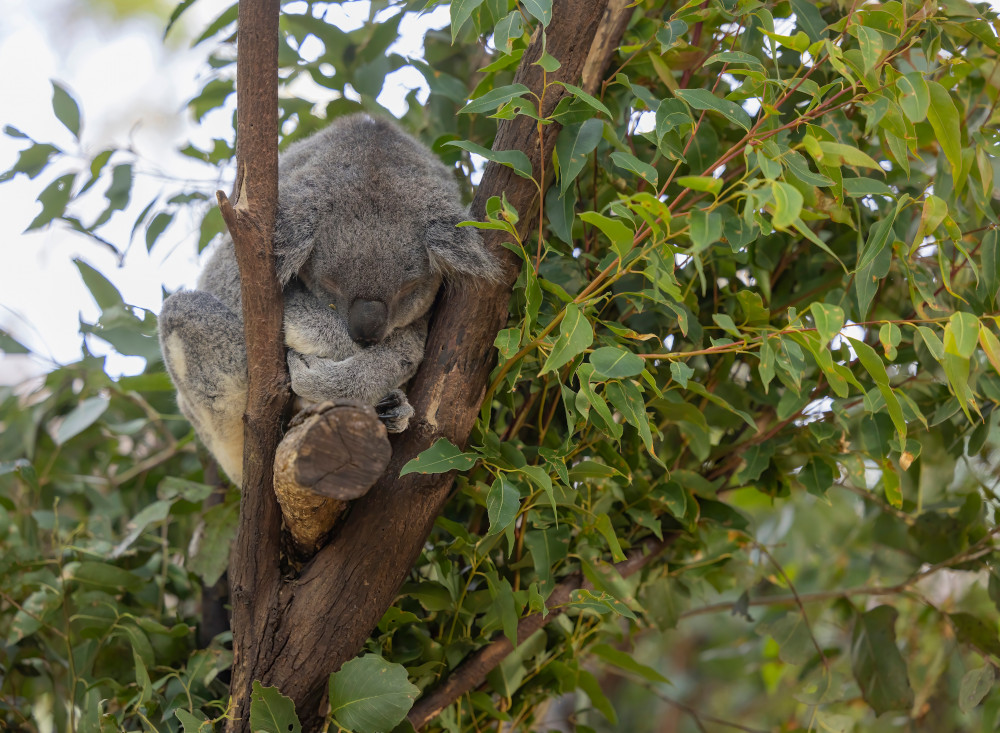
This issue affects many species including some of Australia’s most iconic species. For example, koalas have experienced significant population declines linked to habitat loss, with increasing admissions to wildlife rehabilitation centres due to vehicle strikes, dog attacks, disease and displacement into unnatural locations in urban areas (e.g. telephone poles), highlighting the welfare consequences of urban encroachment [5,6]. From 2000-2017, an estimated 1 million hectares of suitable koala habitat was destroyed due to land clearing [7]. Similarly, kangaroos in highly urbanised regions show elevated mortality rates associated with human activities, with one Queensland study reporting that of the kangaroo populations identified, 42% had declined in abundance [8].
As demand for housing continues to increase, these pressures are expected to escalate, threatening biodiversity persistence while compromising animal welfare through injury, chronic stress, disease, reduced reproductive success, and increased mortality.
Effect of climate change
Climate change is increasingly driving habitat loss through rising temperatures and sea levels, altered rainfall patterns, and more frequent extreme weather events such as floods, bushfires and droughts, resulting in substantial impacts on animal welfare and biodiversity. Coastal ecosystems such as wetlands, mangroves, and estuaries are threatened by rising sea levels, while temperature shifts influence forests, grasslands, and water availability, forcing species into shrinking or fragmented habitats [9].
The 2019-2020 Australian “Black Summer” bushfires exemplified these impacts, burning approximately 24 million hectares and killing or displacing nearly three billion animals such as the brush-tailed wallaby, an endangered species in Victoria and New South Wales [10]. Similarly, the frequency of extreme fire events globally increased by 2.2 fold from 2003 to 2023 [11], reflecting the growing influence of climate change on habitat destruction.
Habitat loss and environmental instability disrupt animal migration patterns, breeding and feeding behaviours, increases competition for limited resources, heightens disease susceptibility through chronic stress and weakened immunity, and can accelerate species declines [1,2,10]. These extreme events highlight the severe and multifaceted consequences of climate change on wildlife survival and welfare.
What can be done?
The RSPCA believes that wherever human activities pose a potential negative impact on wild animals, measures must be undertaken to ensure they are conducted in a way that avoids injury, suffering and distress. Where habitat loss and fragmentation are likely to occur (for example, land clearing proposals), legislative and policy reforms are required to ensure risk of harm to animals is appropriately evaluated and that effective precautionary steps are implemented. Partial reforms to the Environment Protection and Biodiversity Conservation Act 1999 (Cth) were introduced in 2026 but significant ongoing work remains to protect biodiversity and reverse population decline of vulnerable native species.
Relevant podcast
References
Finn HC & Stephens NS (2017) The invisible harm: land clearing is an issue of animal welfare. Wildlife Research, 44(5):377-391.
Hing S, Narayan EJ, Thompson RCA, Godfrey SS (2016) The relationship between physiological stress and wildlife disease: consequences for health and conservation. Wildlife Research, 43(1):51-60.
Brunton EA, Brunton AJ, Conroy G (2025) From safe to stranded: Land use and climate change threaten habitat of iconic Australian macropods. Ecology and Evolution, 15(10):e72236.
Cogger H, Dickman C, Ford H, Johnson C, Taylor M (2017) Australian animals lost to bulldozers in Queensland 2013-15. World Wildlife Fund, Sydney, Australia.
Taylor-Brown A, Booth R, Gillett A, Mealy E, Ogbourne SM, Polkinghorne A, et al. (2019) The impact of human activities on Australian wildlife. PLoS ONE, 14(1):e0206958.
Narayan E (2019) Physiological stress levels in wild koala sub-populations facing anthropogenic induced environmental trauma and disease. Scientific Reports, 9(1):6031.
Ward M, Simmonds J, Reside A, Watson J, Rhodes J, Possingham H, et al. (2019) Lots of loss with little scrutiny: The attrition of habitat critical for threatened species in Australia. Conservation Science and Practice, 1:e117.
Brunton EA, Srivastava SK, Schoeman DS, Burnett S (2018) Quantifying trends and predictors of decline in eastern grey kangaroo (Macropus giganteus) populations in a rapidly urbanising landscape. Pacific Conservation Biology, 24(1):63-73.
Datta P, Behera B, Rahut DB, Sonobe T (2025) Human-wildlife dynamics in a changing climate. In: Datta P, Behera B, Rahut DB, Sonobe T, editors. Living on the Edge: Climate Change and Human-Wildlife Interactions in the Buxa Tiger Reserve of India. Cham: Springer Nature Switzerland; p. 1-14.
Sturman A, Celermajer D, MacDonald F, Verlie B, Heenan N, Schlosberg D (2025) Community efforts to care for animals during climate disasters: Experiences and recommendations from an Australian bushfire affected region. International Journal of Disaster Risk Science, 16(2):190-200.
Cunningham CX, Williamson GJ, Bowman DMJS (2024) Increasing frequency and intensity of the most extreme wildfires on Earth. Nature Ecology and Evolution, 8(8):1420-1425.
Was this article helpful?

This work is licensed under a Creative Commons Attribution-NonCommercial-NoDerivatives 4.0 International License.