

How do I care for newborn kittens and their mother?
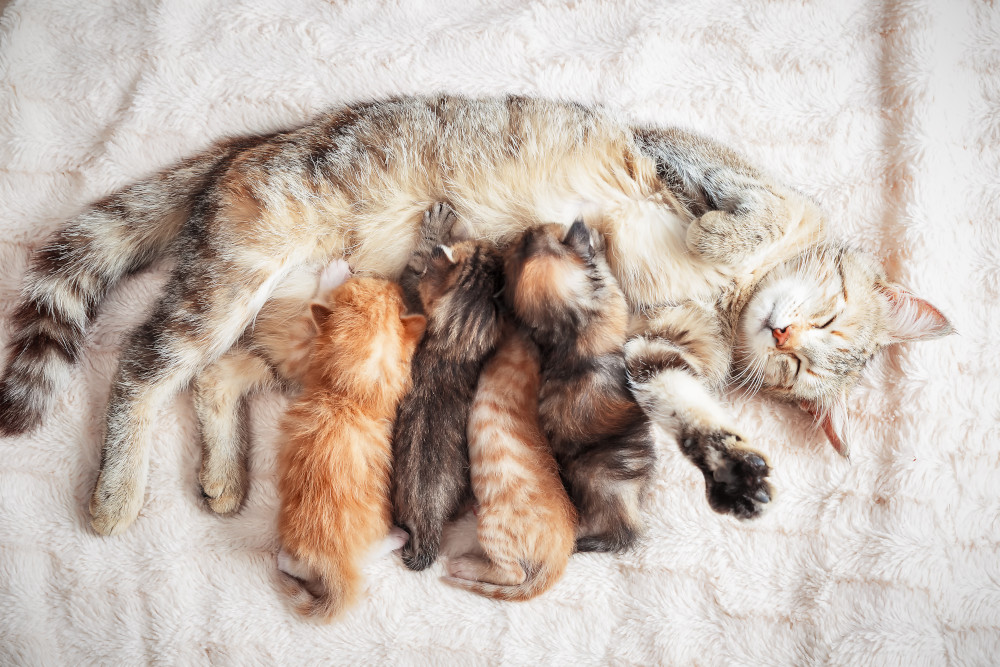
The RSPCA strongly recommends seeking veterinary advice to help ensure your cat and her kittens receive the best possible care.
My cat gave birth, what should I do?
After birth, newborn kittens and their mother are vulnerable. They need a calm, quiet environment to help them thrive. In most cases, the mother cat will naturally provide everything her kittens need at first. Monitor the mother and kittens closely, but keep disturbances to a minimum while she settles into motherhood.
Kittens and their mother need special care, including appropriate environmental conditions, good nutrition, socialisation, vaccinations, desexing, microchipping, worming, and external parasite prevention.
When to call the vet
While most cats give birth without any need for human intervention, there are some risks after birth. Keep a close eye on both the mother and her kittens and look out for signs that something may be wrong, such as excessive vaginal bleeding, abnormal discharge, prolapse of the uterus (womb), difficulties walking, poor appetite, excessive drinking, or vomiting. If you notice any of these signs or have concerns about the health or wellbeing of the mother or her kittens, contact your vet for advice [1,2].
Disturbance, frequent interruptions, or pain can sometimes cause a mother cat to reject or harm her offspring. For this reason, it is essential to provide a calm, quiet environment and to avoid disturbing the mother and her kittens unless necessary.
If you notice anything else unusual or are unsure whether something is normal, it’s always best to check with your vet.
What you can expect to see after your cat gives birth
Many female cats are naturally good mothers, and some normal post‑birth behaviours you may notice include licking their kittens, nuzzling, and purring. A mother cat may also initially behave differently towards people as she instinctively tries to protect her kittens, so it is best to monitor from a distance and avoid unnecessary interaction. She may attempt to move her kittens if she does not feel the area is safe. If this happens, do not try to stop her. Instead, provide a quiet, warm, and safe space where she can settle with her kittens.
Environmental conditions
Once your cat has given birth, providing the right environment is essential for the welfare of both the mother and her kittens. The area should be kept warm, have good airflow, and include dry, clean bedding to maintain good hygiene. It should also be quiet, with minimal disturbances. Mothers and their kittens should be kept separate from other pets, including other cats, to give them peace and quiet and to help protect them from infections [1].
Nutrition
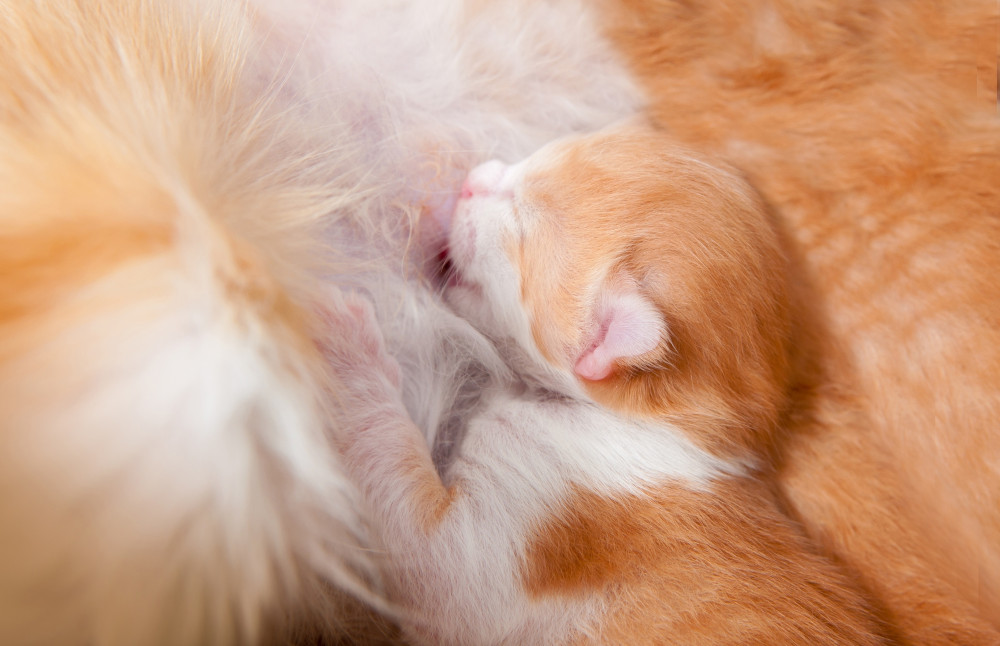
The first milk (colostrum) is vital for the health and development of newborn kittens, and they must drink it as soon as possible after birth. Ideally, kittens should continue to drink milk until weaning at about eight weeks of age. Where possible, allow kittens to wean naturally. Gradually introduce solid food that is suitable for kittens.
Nursing mothers need plenty of energy to support milk production, so it is important that they have access to appropriate, nutritious food. Feed the mother a high-quality kitten food or, if available, a food specifically formulated for pregnant and nursing cats to help ensure she receives the additional nutrients needed during this period. Nursing cats should be able to eat as much as they want.
In the first few weeks, a mother cat with nursing kittens will usually leave them only briefly to eat, drink, and use the litter tray. Ensure that essential resources such as food, water, and a litter tray are easily accessible so she can use them whenever needed.
As the kittens develop, they will also need appropriate access to litter trays. Provide them with access to a low-sided litter tray that they can easily get in and out of. Use non-clumping, low-dust, natural biodegradable litter, such as one made from paper or wood. Many kittens learn to use the litter tray by watching their mother.
If you have any concerns that your cat or her kittens are not eating or drinking enough, seek advice from your vet.
Kitten socialisation
Touching or handling kittens before they are two weeks old should generally be avoided unless there is a welfare concern or if a vet has advised otherwise. In some cases, handling newborn kittens too early can cause the mother cat to become stressed and may lead to rejection of her kittens.
Once kittens reach around two weeks of age and their eyes have opened, gentle handling can begin. This should start with light stroking lasting no more than a few minutes at a time. If the mother cat shows signs of stress or agitation, such as becoming restless, vocalising, repeatedly approaching or attempting to move her kittens, stop handling them and give her space. In some cases, it may be best to take a gradual approach by calmly sitting nearby and observing before attempting any hands‑on interaction.
The socialisation period (also known as the sensitive period) occurs between approximately two and seven weeks of age. During this stage, a kitten’s brain and sensory systems are still developing, and the experiences they are exposed to play a critical role in shaping how they respond to the world.
Socialisation involves gradually exposing kittens to a variety of experiences in a calm and positive way. Gentle handling, interactions with their mother and siblings, and appropriate introductions to people, objects, and other experiences can help prepare kittens to cope with the world around them.
During the first few months of life, gradually and positively introduce kittens to:
- different people, ideally of different ages
- gentle handling, including touching their paws and looking in their ears
- everyday household sights and sounds
- litter trays and different types of litter
- toys and opportunities to play
Veterinary care
Talk to your veterinarian about vaccinations, microchipping, worming, external parasite prevention, and desexing of the kittens and their mother.
The RSPCA advocates for desexing to reduce the population of unwanted cats and kittens in the community. Desexing your female cat helps prevent future unwanted litters and can also reduce the risk of certain health problems.
Female cats can usually be desexed at around eight weeks after they give birth, once their kittens have been fully weaned. The RSPCA also recommends desexing kittens before four months of age, with early-age desexing often performed from eight weeks of age.
Rehoming kittens
Kittens should remain with their mother and littermates until they are at least eight to nine weeks of age.
For more information on caring for newborn kittens and their mother, including advice on the most appropriate timing for desexing, consult your vet.
RSPCA Australia encourages cat adoption to address the large number of unwanted cats and kittens in shelters and foster care. Thousands of animals enter shelters each year, many as a result of uncontrolled breeding, which contributes to ongoing welfare issues. By choosing adoption, people can give a second chance to cats and kittens in need.
To further address overpopulation, the RSPCA supports preventing unwanted or unplanned breeding of companion animals through surgical desexing or other safe, suitable methods, such as appropriate gonad-sparing surgical or non-surgical sterilisation, helping to reduce the number of unwanted animals born.
References
Was this article helpful?

This work is licensed under a Creative Commons Attribution-NonCommercial-NoDerivatives 4.0 International License.