

Articles tagged with 'Pet owner basics'

How can I keep my rabbits safe against household hazards?
Many rabbits are kept indoors, with free range of the house and even parts of the yard, but these unsupervised activities can put your rabbit at risk.
How should I care for my backyard chickens?
The keeping of backyard poultry, once an almost universal practice in Australia, declined in the 1970s and 80s, but is now enjoying a resurgence in popularity. People are keeping poultry for food (e. g. , eggs), as pets, and as show birds.
What kind of enclosure does my bird need?
Birds have been kept as companion animals (pets) for many hundreds of years, but the last 50 years have seen a surge in their popularity.
Can my mice get parasites?
It is not uncommon for mice to be affected by infestations of external parasites such as fur mites.

What do I need to know about reproductive control in ferrets (including desexing)?
Some important things to know about ferrets and reproduction: A male ferret is called a ‘hob’. A female ferret is called a ‘jill’. Jills are ‘induced ovulators’. This means that the release of eggs (ovulation) from the jill’s ovaries is induced by mating.
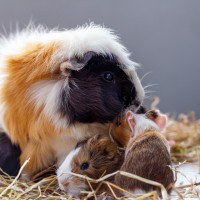
How do guinea pigs breed?
Before you decide if you want to breed your guinea pigs, there are some things you need to know: Female guinea pigs become capable of breeding by the age of 4-8 weeks. The males reach sexual maturity at about the same time.
Can humans and animals transmit diseases to each other?
Image credit: CDC There are specific infections that can be transmitted between animals and humans which may cause disease; these are known as ‘zoonotic diseases’ or zoonoses.
How should I take care of my cat or dog’s teeth?
Our pets need regular and consistent dental care to make sure their teeth stay healthy and functional for as long as possible, and to prevent dental plaque and tartar/ build up and dental and periodontal disease.
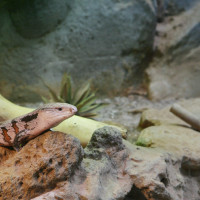
How should I care for my blue tongue skink?
The most common reptile species kept as pets are typically medium-sized, non-threatened, captive-bred, and easily obtained. The Eastern Blue Tongue skink (Tiliqua scincoides scincoides) fits this description perfectly, making it a popular pet around the world.
How, when, and why should I worm my birds?
Worming birds – both aviary birds and companion pets – is a subject that is hotly discussed in avicultural and pet circles, with almost as many opinions as there are bird keepers. Thoughts seem to range between worming your bird every 6 weeks to never doing it at all.