
Articles tagged with 'Animal husbandry procedures'
Why are many male farm animals castrated?
Male sheep, cattle, goats and pigs are routinely castrated in order to reduce aggression and subsequent injury. Methods of castration are either by blade or rubber ring. At present, castration is carried out as a routine husbandry procedure on young animals without the use of anaesthetic or pain relief.
What is the RSPCA’s view on nose rings for bulls?
The RSPCA believes that nose ringing for the purpose of controlling bulls is only acceptable when performed by a veterinarian. The ring should be smooth and well-fitting and must not inflict pain.
What are the animal welfare issues with shearing of sheep?
Shearing is the process whereby the sheep’s fleece (wool) is removed using mechanical shears called ‘handpieces’. For sheep breeds that are specifically grown for wool production, the fleece needs to be removed regularly because it grows continuously. Sheep are typically shorn at least once a year, usually in spring.
What is boar taint and how can it be prevented?
As male pigs reach puberty, they start producing andosterone, a male sex hormone, and skatole, a digestive by-product formed in the intestines. The production of andosterone and skatole is responsible for boar taint, an unpleasant odour and taste found in meat from some (not all) entire male pigs.
Is tethering of farm animals acceptable?
Tethering is where an animal is fastened by a chain to a central anchor point, causing it to be confined to a specific area.
What are the animal welfare issues with weaning nose rings and other anti-suckling devices for calves?
Anti-suckling devices such as nose rings or nose flaps are designed to wean calves off milk by preventing access to the cow’s udder while the cow and calf are still together. A nose ring is a metal or plastic ring with spiked extensions.
Why are calves separated from their mother in the dairy industry?
For cows to produce milk, they have to give birth to a calf. Standard dairy industry practice is to separate calves within 24 hours of birth. This is done to reduce the risk of disease transmission to the calf (e. g.
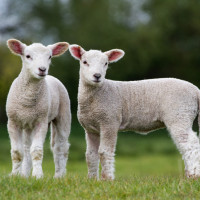
What is the RSPCA’s view on mulesing and flystrike prevention in sheep?
Mulesing involves cutting crescent-shaped flaps of skin from around a lamb’s breech and tail. When this painful wound heals, it creates an area of bare, stretched scar tissue which has no folds or wrinkles and is less likely to attract blowflies.
What are the animal welfare issues associated with pig production?
In Australia, pigs farmed for meat may be housed in intensive indoor, semi-indoor (outdoor-bred) or outdoor (free-range) farming systems. Intensive indoor housing systems can lead to several serious welfare problems.
What is the RSPCA’s view on dubbing poultry for show purposes?
The RSPCA regularly receives complaints from members of the public regarding the practice of dubbing of exhibition poultry.