

Aquatic Animals
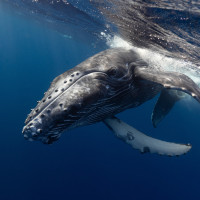
Why do whales strand?
It is often very difficult to determine the cause of a whale stranding, however, there are several plausible explanations for at least some of the whale strandings that occur: Faulty navigation: many of the whales that are found stranded normally live in the open ocean and are not experienced at navigating…
What should be done when a whale is stranded?
Often when a whale is found stranded on a beach, the first reaction of humans is to help return the whale to the sea.
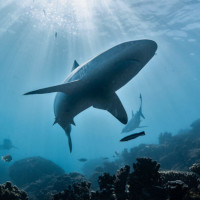
What is the RSPCA’s view on killing sharks to reduce shark incidents?
The RSPCA does not support killing sharks as a response to shark incidents involving humans. This approach causes unnecessary animal suffering to both target and non-target species.
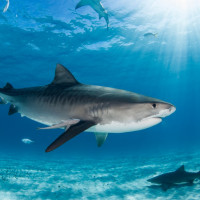
What is shark finning and is it legal in Australia?
Shark fin soup has been a traditional east Asian dish, symbolic of wealth and prestige, for several hundred years. In recent decades the popularity of shark fin soup has soared and the effect on wild shark populations has been disastrous.
Can enclosed yabby traps harm animals and are they legal to use?
Despite bans and restrictions being placed on the opera house net trap in different states and territories, they continue to be used. These traps are very popular for catching freshwater crayfish but have caused the drowning of other animals, including platypus and other aquatic species.
Do fish feel pain?
The answer is yes. Scientific evidence that fish are sentient animals capable of experiencing pain and suffering has been building for some years. It has now reached a point where the sentience of fish is acknowledged and recognised by leading scientists across the world.
What is the RSPCA’s view on bluewater fishing?
Scientific evidence that fish are sentient animals capable of experiencing pain and suffering has been building for some years. It has now reached a point where the sentience of fish is acknowledged and recognised by leading scientists across the world.
How can fish caught in commercial fishing be killed humanely?
The humane killing or slaughter of commercially caught fish requires that fish are carefully handled and effectively stunned (causing immediate insensibility) and bled out rapidly after capture.
What is the most humane way to kill a fish intended for eating?
All fish that are caught for eating must be handled carefully to reduce stress and humanely killed as soon as possible after capture. Humane killing requires that the fish is stunned (rendered instantaneously insensible) before being bled out. Fish should remain in water until immediately prior to stunning.
What is the RSPCA’s view on keeping dolphins in captivity?
Dolphins are marine mammals belonging to the group known as cetaceans, which also includes whales, orcas and porpoises. RSPCA Australia recognises that some animals have complex social, physical or behavioural needs which are extremely difficult to provide for in captivity.