

How can science help improve horse welfare and human safety?
Equipment such as whips, nosebands, bits, spurs, and tongue ties are commonly used to modify behaviour or performance in horses. Horsemanship has been a longstanding feature of the equine industry, with roots back to as early as 2000 BCE. Some historical methods of training horses are still prevalent in society today under the guise of tradition or efficacy. These practices pose significant welfare risks. In an era where research has provided overwhelming evidence in favour of supporting the physical and mental wellbeing of animals, this calls for those working with horses to consider how science can help us to train, handle, and compete with horses better and in line with animal welfare expectations in society today.
What is equitation science?
Equitation science is the study of horse-human interactions, with a focus on how horses learn, perceive, and respond to human cues, to promote the effective and safe training and handling methods of horses [1]. While old-school horsemanship has been rooted in intuition and anecdotal long-standing practices, equitation science is a scientifically rigorous and evidence-based practice centred on the wellbeing of horses. It recognises that horses experience positive and negative mental states and that using a dominance approach towards horses is not appropriate, as horses are forced to perform as they attempt to escape applied pressure. The International Society for Equitation Science, as a leader in the equitation science field, has developed the Principles of Learning Theory in Equitation [2], including the correct use of a variety of training techniques which give greater regard for the safety of horses and humans. By engaging in training methods aligned with a horse’s natural behavioural tendencies and physical capabilities, both horses and humans can mutually benefit and develop a positive relationship.
How does equitation science help?
Benefits to horses
There are many benefits for horses by applying the principles of equitation science, including improved mental and physical welfare.
Improved mental welfare
Horsemanship has predominantly centred on negative reinforcement — that is, the release of pressure or an aversive stimulus (such as bit or leg pressure) once the horse responds in the desired way — as a primary training method. However, this may cause stress, fear, and pain for the horse, which is suggestive of a poor mental state. By contrast, equitation science emphasises learning theory, promoting training techniques which are predictable, consistent, and aligning with natural behaviour and movement. It may also promote positive mental states through the use of positive reinforcement strategies (reward-based, such as pleasant odours or food-based rewards) [3,4], in addition to the use of minimal force in any negative reinforcement, and avoidance of punishment. Through these training approaches, horses not only experience a reduction in fear and stress, but an increase in positive emotions, which can enhance the human-horse connection. A positive mental state, which can be characterised by maximising positive experiences and minimising negative ones, is paramount for good animal welfare, as emphasised in the Five Domains Model [5].
Improved physical welfare
Equitation science considers not only the mental wellbeing of horses, but also the physical, as physical pain and discomfort can contribute to a poor emotional state [6]. For example, poor saddle fit, unbalanced riding, or unnatural carriage of the head and neck, can lead to musculoskeletal issues, including lameness or chronic pain. Other causes of poor physical welfare may be more intentional, such as the physical pain associated with use of equipment, including whips. These not only cause physical pain, potential bruising and wounds, but also elicit avoidance behaviours such as kicking, biting or rearing. Some horses who are overwhelmed may shut down or withdraw as a way to cope with the situation. By engaging with horses in a way which safeguards their physical wellbeing, horses can experience improved physical and mental states.
As discussed, where horses are unable to perform as expected, this may lead to an escalation of aversive treatment, resulting in an exacerbation of both negative mental and physical impacts.
Benefits to humans
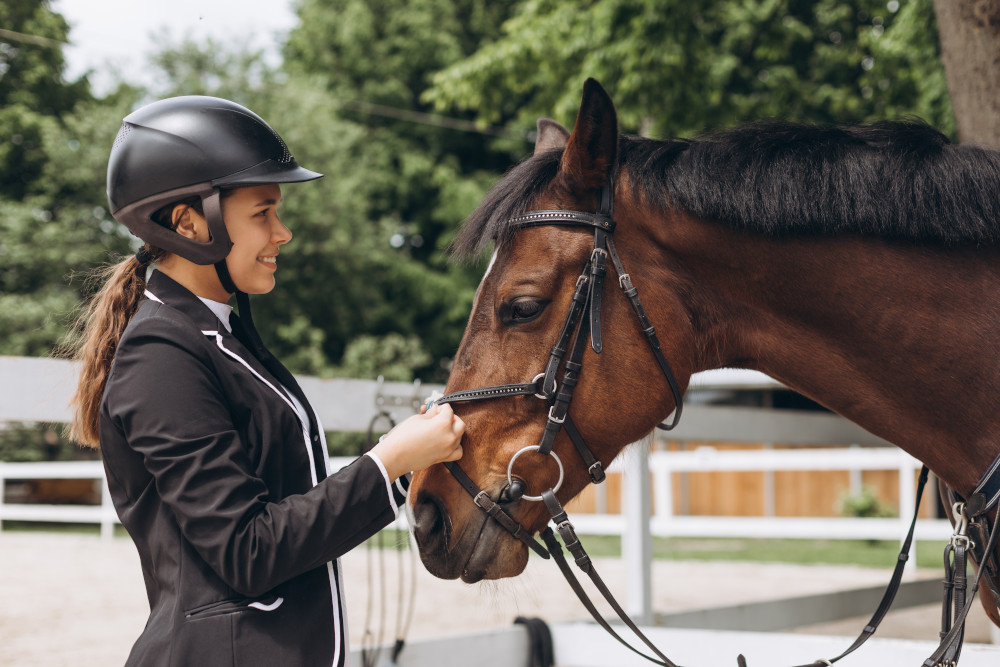
It is not only horses who benefit from application of the principles of equitation science, but also their handlers and riders. By practicing the principles of equitation science, those working with horses can experience improved performance and satisfaction, greater safety, and better meet community expectations.
Improved performance and satisfaction
Trainers, owners and others involved in recreational and equestrian sports require horses to perform at a desired level. Negative experiences, such as by the misuse of training equipment, can cause mental and physical stress for the horse, resulting in behaviours such as aggression or avoidance [7]. Conflict behaviours also occur when a horse experiences an internal conflict between what is being asked of them, such as through the use of equipment and cues, and their own motivations and natural behaviour. Horses experiencing motivational conflict may display behavioural signs, including teeth grinding, swishing their tail, and pinned ears [8]. The stress caused by this motivational conflict may have subsequent effects on their training or performance, as horses, like many species, have limited learning abilities and perform sub-optimally when under stress [9]. Instead, by meeting the emotional and physical needs of horses, and by respecting their natural behaviour, horses experience more positive emotions and are more likely to learn effectively. This can result in more trainable and cooperative horses, leading to improved performance, and more enjoyment and satisfaction for the riders and handlers involved.
Improved human safety
Horses who have experienced aversive treatment and anticipate the application of pressure or pain may display behavioural traits such as kicking, biting, or rearing. These behaviours, designed to keep the horse safe from harm, are often dangerous to the people and animals around them and can pose a significant safety risk [3]. In contrast, horses trained in a way which considers their wellbeing and natural behaviour may display more predictable behaviours and fewer undesirable behaviours, which reduces the risk of dangerous behaviours towards humans. Further, subtle signs of fear and pain are often poorly recognised by those working with horses [10]. Handlers who follow the Principles of Learning Theory in Equitation are more informed of subtle behavioural cues, such as changes in body language, to gauge if horses are displaying conflict behaviours or feeling discomfort. For example, horses experiencing pain by a curb bit may toss their head while being ridden, resulting in both an unbalanced horse and rider with potentially dangerous outcomes.
Meeting community expectations
The image and reputation of the equestrian sector is coming under increasing scrutiny due to the media attention exposing inappropriate equipment use and abusive treatment of sports horses. For example, the excessive force applied through equipment (including double bridles), which reduced blood flow to the horse’s mouth resulting in ‘blue tongue’ at the 2024 Paris Olympics [11], or the excessive and unjustified whipping of horses by Olympians [12,13], have raised significant concerns about the welfare of horses competing in sporting events.
By utilising the principles of equitation science, including the appropriate use of equipment and reducing fear and pain, the horse sports sector will be able to demonstrate their commitment to safeguarding the physical and emotional wellbeing of horses. This can be beneficial in enhancing the reputation of the industry and meeting community expectations for horse welfare.
Equitation science offers a contemporary training approach as an alternative to conventional horsemanship, focused on the horse’s sentience and motivations to achieve a sustainable, productive, and enjoyable horse-human working relationship. Perhaps most importantly, the best thing someone engaging with or training a horse can consider is “if I were in the horse’s shoes…”
References
Goodwin D, McGreevy P, Waran N, McLean A (2009) How equitation science can elucidate and refine horsemanship techniques. Veterinary Journal 181(1):5–11
International Society for Equitation Science (2025) Principles of learning theory in equitation. Accessed 16 Apr 2026
Starling M, McLean A, McGreevy P (2016) The contribution of equitation science to minimising horse-related risks to humans. Animals 6(3):15
Rørvang M V, Nielsen B L, McLean A N (2020) Sensory abilities of horses and their importance for equitation science. Frontiers in Veterinary Science 7:633
Mellor D J, Beausoleil N J, Littlewood K E, McLean A N, McGreevy P D, Jones B, Wilkins C (2020) The 2020 five domains model: including human-animal interactions in assessments of animal welfare. Animals 10(10):1870
Hernández-Avalos I, Mota-Rojas D, Mendoza-Flores J E, Casas-Alvarado A, Flores-Padilla K, Miranda-Cortes A E, Torres-Bernal F, Gómez-Prado J, Mora-Medina P (2021) Nociceptive pain and anxiety in equines: physiological and behavioral alterations. Veterinary World 14(11):2984–2995
McBride S D, Mills D S (2012) Psychological factors affecting equine performance. BMC Veterinary Research 8:180
O'Connell E, Dyson S, McLean A, McGreevy P (2025) No more evasion: redefining conflict behaviour in human-horse interactions. Animals 15(3):399
Henshall C, Randle H, Francis N, Freire R (2022) Author correction: the effect of stress and exercise on the learning performance of horses. Scientific Reports 12:5322
Rogers S, Bell C (2022) Perceptions of fear and anxiety in horses as reported in interviews with equine behaviourists. Animals 12(21): 2904
Hummel T (2024) Equestrian governing body finds blue horse tongues in dressage review. Accessed 16 Apr 2026
Morwood M (2024) Olympic equestrian champion Charlotte Dujardin shown repeatedly whipping horse on video. Accessed 16 Apr 2026
Stevens R (2025) Equestrian Australia received complaint about olympian weeks before investigating. Accessed 16 Apr 2026
Was this article helpful?

This work is licensed under a Creative Commons Attribution-NonCommercial-NoDerivatives 4.0 International License.