

What are barn-laid eggs?
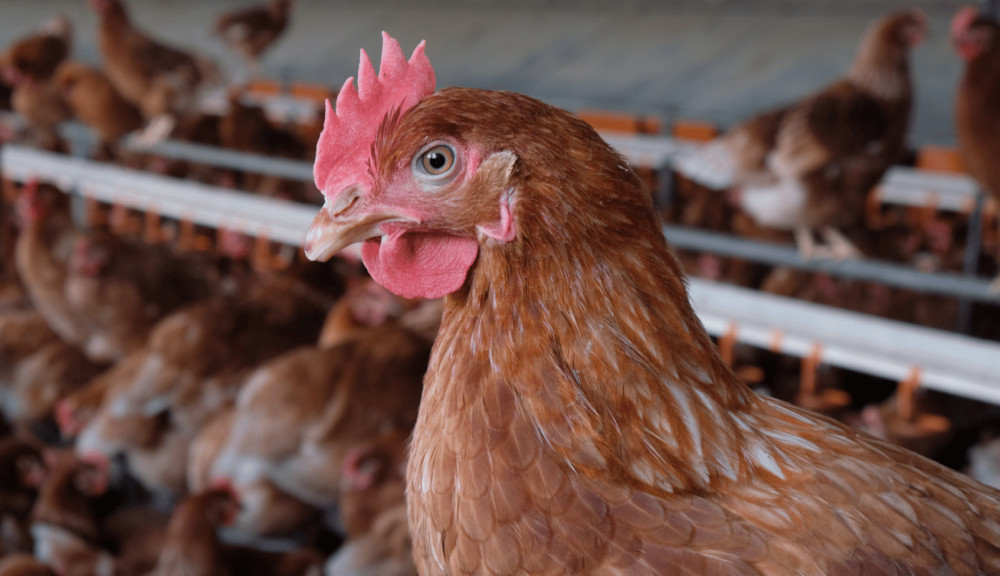
Barn-laid (or cage-free) eggs, such as those from well-managed barn and aviary systems, are a good alternative to cage eggs, and can provide hens with the opportunity to stretch and flap their wings, nest, perch, dust bathe, and forage.
Barn-laid eggs are generally marketed as ‘cage-free’ eggs. In these systems, hens aren’t kept in cages but instead can move on the floor or on a raised platform within large sheds, or move up and down via different levels within the shed (aviary or multi-tier systems). Flock size varies between thousands and tens of thousands of birds in each shed.
In contrast to hens in cages, hens in barn or aviary systems can carry out normal behaviours such as stretching and flapping their wings. All barn and aviary systems have nest boxes where hens can lay their eggs, and all aviary systems and some barn systems have perches and litter which are key to catering to hens’ behavioural needs. Some barns have slats or wire-mesh flooring which do not allow hens to forage, scratch the ground, and dust bathe.
All layer hen housing systems have advantages and disadvantages, but caged housing systems inherently compromise the welfare of layer hens because of the confinement and behavioural restriction they impose. Barn-laid (or cage-free) eggs from well managed systems are therefore a good alternative to cage eggs.
Under the RSPCA Australia Standards for Layer Hens, birds in barn laid systems must be provided with nest boxes for laying, perches for roosting, suitable litter for scratching, foraging and dust bathing, and environmental enrichment to encourage natural behaviors.
To learn more about RSPCA Certified, visit our website, or to download the Standard, click here.
Was this article helpful?

This work is licensed under a Creative Commons Attribution-NonCommercial-NoDerivatives 4.0 International License.