

Why are protective behaviours in cats important?
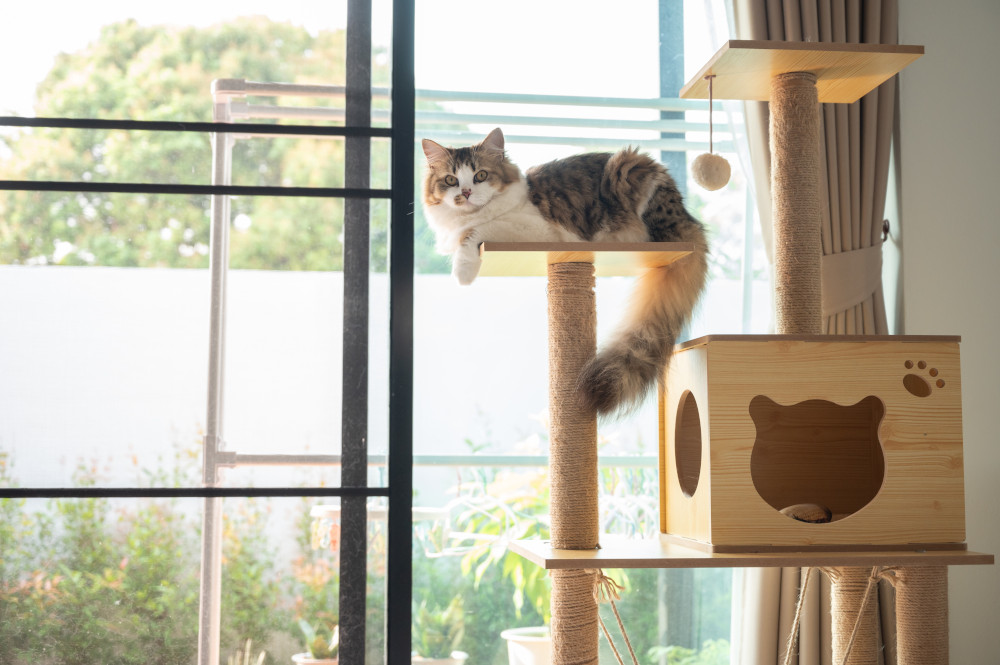
Protective behaviours are not “bad” behaviours
Hissing, growling, hiding, or moving away are normal behaviours that help cats communicate discomfort and avoid conflict. These behaviours help cats prevent situations from escalating to physical aggression.
Cats, like humans, can experience a range of emotional states that influence their behaviour, welfare, and interactions with humans, other animals and their environment. Protective emotions, including fear, frustration, and pain-related responses serve as essential survival mechanisms that enable cats to avoid threats, maintain a sense of control, and preserve both their physical and emotional wellbeing [1]. These emotional states often manifest as protective behaviours, which may be misunderstood or viewed negatively despite their important adaptive function.
Understanding feline emotions and recognising the behavioural indicators associated with them is crucial for accurately interpreting a cat’s needs, improving welfare outcomes, and fostering positive human–animal interactions. Failure to recognise or appropriately respond to these protective behavioural expressions can lead to increased stress, compromised health, behavioural problems, and reduced quality of life [2]. Therefore, understanding protective behaviours and their underlying motivations is essential for improving cat welfare across home, shelter and veterinary environments.
The role of protective behaviours
Protective behaviours in cats are behavioural responses designed to preserve safety, maintain control over their environment, and protect access to essential resources, as well as their physical and emotional wellbeing [1]. These behaviours enable cats to establish boundaries and protect themselves from harm by signalling to other animals, thereby helping to prevent potentially costly negative encounters that could impact their fitness and survival [3].
These behaviours are often driven by motivational-emotional systems including fear-anxiety, frustration, and pain. Fear-related behaviours enable cats to avoid or escape perceived threats, while frustration responses arise when a cat in unable to achieve an expected outcome or experiences a loss of control. Pain-associated behaviours serve a protective function by helping cats minimise further injury or discomfort [3]. As naturally autonomous animals with a strong need for control over their surroundings, cats are particularly sensitive to situations that challenge their sense of security or predictability.
Understanding protective behaviours is important because these responses are driven by survival mechanisms rather than deliberate aggression or “bad behaviour.” Misinterpretation or ignoring these behaviours can negatively impact feline welfare, contribute to chronic stress, strain the human-animal bond, and increase the risk of relinquishment. Stress and fear-related protective behaviours may also make handling difficult and prevent caregivers from seeking timely medical care or administering necessary treatment, ultimately compromising health outcomes. Recognising and responding to these behaviours can facilitate safer interactions, help reduce stress, and support improved welfare.
Common protective behaviours we can observe in cats
Cats display a range of protective behaviours depending on the underlying emotional motivation.
Fear and anxiety commonly result in avoidance behaviours intended to increase distance from a perceived threat [3]. Common fear-related protective behaviours may include:
- Hiding
- Crouching
- Freezing
- Retreating or attempting to escape
- Flattened ears (pointing sideways and pinned back)
- Dilated pupils
- Reduced interaction or social withdrawal
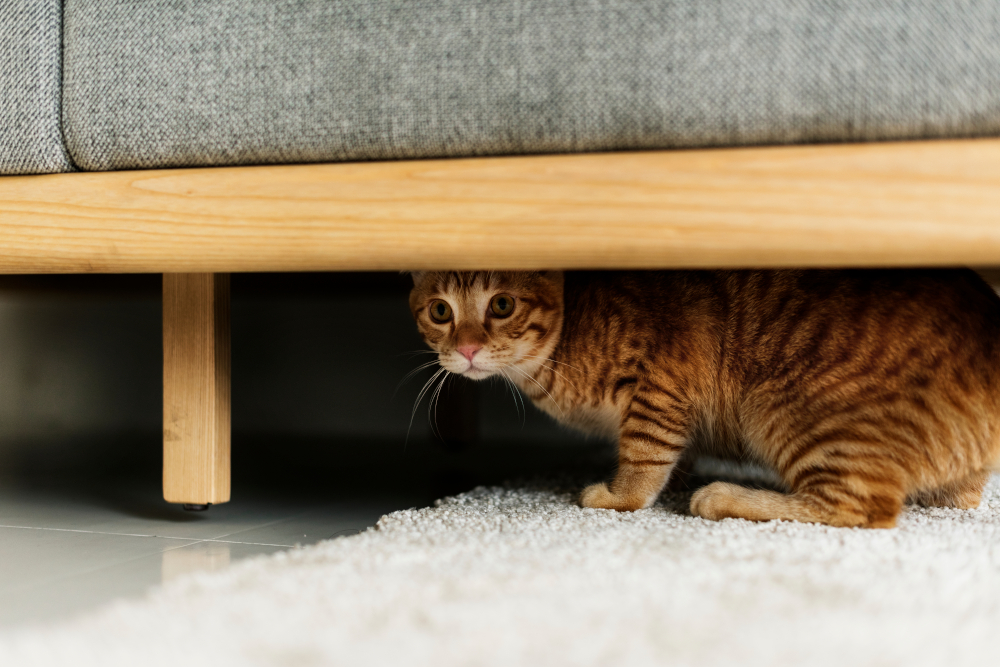
Hiding is a normal protective behaviour that cats may use when they feel anxious, fearful, frustrated, or unsafe.
If escape is not possible, these behaviours may escalate, and cats may resort to defensive aggression as a strategy to protect themselves by increasing distance from the perceived threat [3]. These behaviours may include:
- Hissing
- Growling
- Swatting
- Biting

A hiss is often a warning signal that a cat needs more space and is trying to avoid conflict.
Frustration-related behaviours may appear similar but stem from an inability to control a situation [3]. Restriction, restraint, blocked access to resources, or unwanted interaction imposed on the cat can trigger behaviours such as:
- Vocalisations (e.g. yowling, grunting or howling, extended meowing)
- Struggling against constraints or escape attempts
- Redirected aggression (e.g., at the owner or another pet in the household)
- Sudden defensive reactions (e.g., petting induced overstimulation leading to a sudden defensive bite)
Pain can also trigger protective behaviours, with cats responding with:
- Withdrawal or hiding
- Reduced activity
- Aggressive responses when touched
- Altered posture or movement
- Reluctance to jump or move
- Hunched posture
- Arched back
- Overgrooming
Chronic pain may also contribute to long-term behavioural changes driven by ongoing physical discomfort and negative emotional associations.
How should we respond to protective behaviours in cats?
Interpreting protective behaviours requires consideration of context and identification of the underlying emotional motivation. Aggressive responses, for example, should not automatically be attributed to fear; frustration and pain are also common contributors. Body language, environmental triggers, medical history, and recent changes in routine all need to be considered when determining whether a cat is responding to a perceived threat, loss of control, or discomfort [4].
Appropriate responses to protective behaviours should focus on reducing stress, increasing predictability, and allowing the cat to maintain a sense of control [5]. Examples include:
- Providing hiding spaces or elevated retreat areas
- Using low-stress, gentle handling techniques
- Minimising loud noises and sudden movements
- Allowing the cat choice and control during interactions where possible
- Avoiding punishment or forced restraint unless necessary
- Recognising early signs of fear, frustration, or discomfort before behaviours escalate
- Investigating potential pain or underlying medical conditions contributing to behavioural changes
- Maintaining predictable routines and access to essential resources
By understanding protective behaviours as a form of communication rather than defiance, caregivers can respond more effectively, support feline emotional wellbeing and welfare, and foster strong, trust-based relationships with their cats.

Quiet companionship can be an important part of bonding with your cat. Allowing them choice and control during interactions helps them feel comfortable and secure.
References
Sparkes A, Rodan I, Carney H, Heath S, Ellis S et al (2022) 10 years of Cat Friendly. Journal of Feline Medicine 24(11):1164-1165
Rodan I (2010) Understanding Feline Behavior and Application for Appropriate Handling and Management. Topics in Companion Animal Medicine 25(4):178–188
Heath S (2018) Understanding feline emotions: … and their role in problem behaviours. Journal of Feline Medicine and Surgery 20(5):437-444
Taylor S, St Denis K, Collins S, Dowgray N, Ellis SLH et al. (2022) 2022 ISFM/AAFP Cat Friendly Veterinary Environment Guidelines. Journal of Feline Medicine and Surgery 24(11):1133-1163
Ellis SLH, Rodan I, Carney HC, Health S, Rochlitz I et al. (2013) AAFP and ISFM Feline Environmental Needs Guidelines. Journal of Feline Medicine and Surgery 15(3):219-230
Was this article helpful?

This work is licensed under a Creative Commons Attribution-NonCommercial-NoDerivatives 4.0 International License.