

How can I train my pet cat, rodent or rabbit at home?
We often associate training with larger companion animals such as dogs and horses, but cats, rabbits, and rodents such as mice are also very capable of learning. There are many benefits to training these pets using appropriate reward-based training methods.
Reward-based training involves rewarding an animal when they perform a desired behaviour, encouraging them to repeat that behaviour in the future [1]. Rewards may include treats, praise, play, or access to something that is valuable to the animal. Clicker training is also a highly effective tool for marking and reinforcing desired behaviours. Reward-based training promotes learning while supporting animal welfare, safety, and a positive human-animal bond.
It is important to recognise that no two animals are the same and that different animals may learn differently. Accounting for an individual animal’s natural behaviours, abilities, learning speed, preferences and tolerance will make the training more enjoyable for your pet. For example, rodents and rabbits are prey animals and their natural learning is based strongly on survival, fear and stress [1]. Cats are both prey and predator animals, meaning they may be alert to changes in their environment and sensitive to sudden sounds and movements while also exhibiting natural stalking, chasing, and pouncing behaviours. Taking these traits into account can help make training more effective and enjoyable. The fundamentals of a training plan should always be patience, consistency, trust-building, and providing animals with choice and control [2].
Why is it helpful to train our companion animals?
Training provides many welfare benefits for small animals beyond simply teaching them to respond to cues or perform tricks.
- Mental stimulation and enrichment - Training encourages animals to think, problem-solve, and interact with their environment and people in a positive way. It also helps animals exercise their cognitive abilities while preventing boredom and frustration [1].
- Encouraging natural behaviours - Training and enrichment activities can encourage animals to express species-specific behaviours such as foraging, exploring, chewing, climbing, digging, and using their senses to investigate the environment.
- Building confidence - Reward-based training can help all animals but especially those who are shy or fearful become more comfortable when interacting with people, the environment and new experiences [2].
- Reducing stress during routine care - Training animals to voluntarily participate in routine procedures, such as entering a carrier, being handled, or receiving grooming and health checks, can help reduce fear and stress and make these experiences more positive [2,3].
- Strengthening the human–animal bond - Training creates opportunities for positive interaction and two-way communication between pets and their owners, helping to build trust and strengthen the human–animal bond [1,2].
- Providing safe out-of-enclosure time - Training can help small pets safely enjoy supervised time outside their enclosure for exercise, and additional mental and physical stimulation. Recall training, target training, and handling training may make these experiences safer and less stressful for both the pet and their carer.
- Reducing undesirable behavioural problems - Providing appropriate mental and physical stimulation may help reduce unwanted behaviours associated with boredom, stress, or frustration, such as destructive chewing, overgrooming, or pacing [1,4].
- Improving welfare and setting pets up for success - Animals who can make choices, engage in rewarding activities, and learn to interact positively with people, other animals, and their environment often experience better overall welfare and quality of life [1,2].
- Supporting safe home-based lifestyles - Training can help companion animals make the most out of their home environment, while enjoying a good quality of life. When combined with appropriate enrichment, exercise, and opportunities to express natural behaviours, training can help keep animals safe and engaged.
Types of training you can do with your small companion animal
There are many everyday situations that training can make easier for you and your pet. Some useful skills you can teach your pet include:
- Recall training (coming when called), which can improve safety and allow safe out-of-enclosure time
- Carrier training to reduce stress during transport for veterinary visits [3]
- Handling and grooming training so your pet becomes more comfortable with nail trims, brushing, or health checks [2]
- Litter training, especially for cats and rabbits
Training can also provide mental stimulation and enrichment through teaching pets non-essential activities. Many cats, rabbits, and rodents can learn things like:
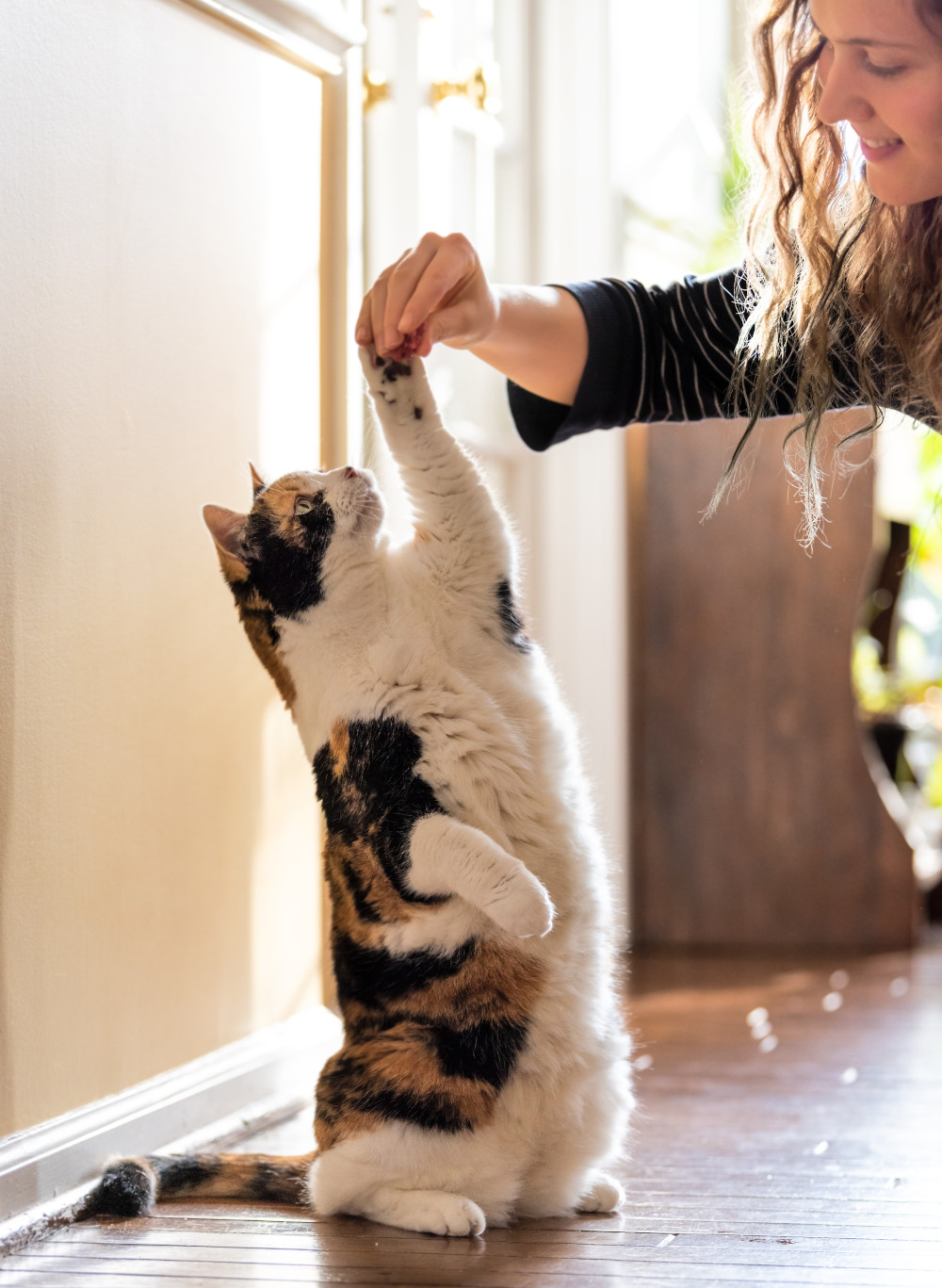
- Simple tricks, such as spinning, sitting, jumping onto platforms or giving a high-five
- Target training, where the animal learns to touch or follow a target stick or hand. This can also be useful for recall training.
- Agility activities such as guiding your pet through tunnels, platforms, ramps, and simple obstacle courses.
Clicker training is a reward-based training technique that uses positive reinforcement to strengthen desired behaviours. A clicker is used to make a ‘click’ sound to mark the moment when an animal performs a desired behaviour. The click marks the exact behaviour being rewarded and is immediately followed by a treat or other reward. Over time, the animal learns to associate the clicker with a reward. This technique acts as a “bridge” in communication, signaling to the animal exactly which behaviour earned the reward, helping to speed up learning [1].
Teaching your small companion animal to come when called
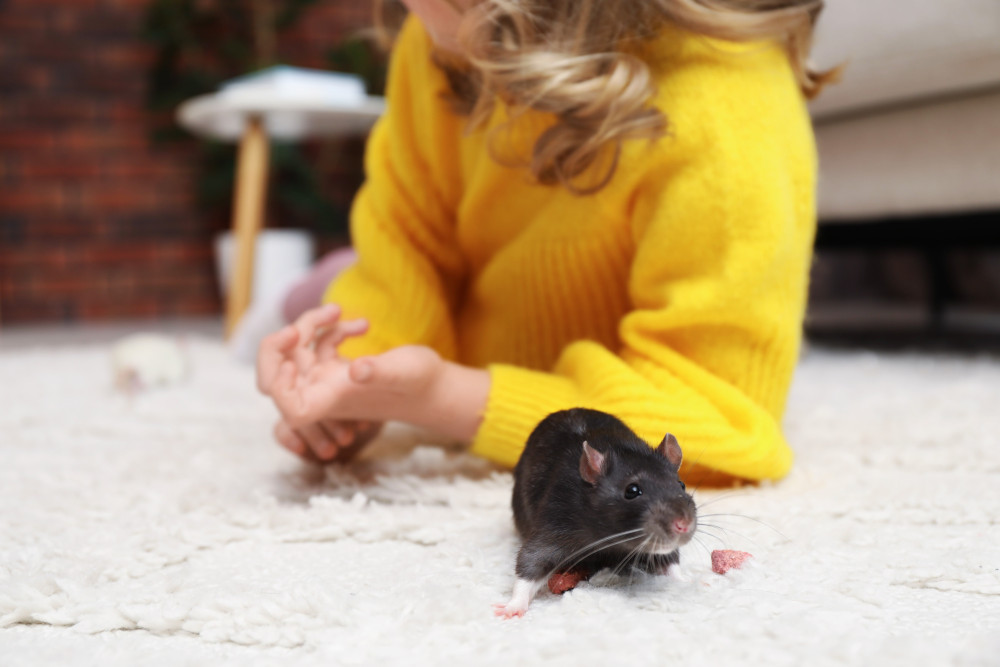
Recall training can help animals voluntarily return to their enclosure or approach their careers.
- Choose a short, consistent cue such as the animal’s name or a word like “come.”
- Pair the cue with a reward. While your pet is already close to you, say the cue and immediately offer a small treat or praise. Repeat this several times over multiple short sessions.
- Increase distance gradually. Once your pet begins associating the cue with a reward, start calling them from a short distance away. Reward them immediately when they approach.
- Practise in different environments. Gradually practise the behaviour in a variety of safe locations that your pet regularly accesses. This helps them learn to respond reliably in different situations and surroundings.
- Gradually reduce the frequency of rewards but continue to occasionally reward the animal when they complete the behaviour so that it remains consistent.
See the “Further Resources” section for advice on how to teach your small companion animal other useful behaviours or tricks.
Teaching your small companion animal to sit
Teaching your animal to sit is a fun trick but can also teach them to stay in one place, when necessary, such as during veterinary checks.
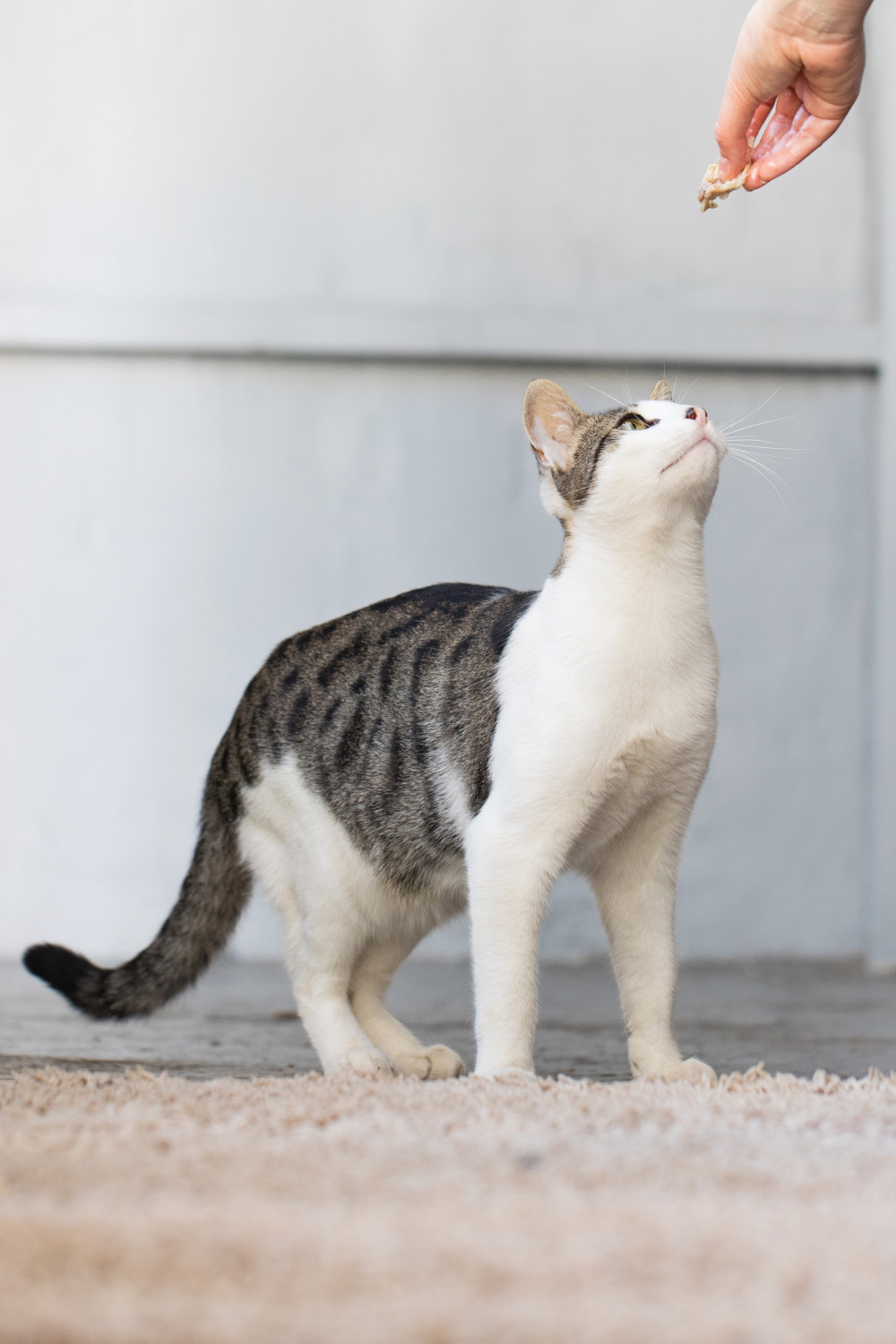
- Hold a reward your animal enjoys when they approach you or are near you.
- Guide the movement. Slowly move the treat upwards and slightly backwards over the animal’s head. As they follow the treat with their eyes and lift their head, they will often naturally lower their hindquarters into a sitting position. If they do not sit, avoid physically pushing or forcing them into a position. Instead, try adjusting the position of the treat, use a more motivating reward, or practise in a distraction-free environment.
- Add a cue. As your animal begins to sit, say a consistent cue such as “sit” and use a hand signal if desired. Repeating the same cue each time helps associate the word or gesture with the behaviour.
- Reward immediately. As soon as your animal’s bottom touches the floor, mark the behaviour with a clicker or immediately provide the reward.
- Repeat in short sessions. Practise over multiple short, positive sessions until your animal begins to respond to the cue without needing to follow the treat each time. Once the behaviour is reliable, gradually reduce the frequency of treat rewards while continuing to reward the behaviour intermittently to help maintain a strong and consistent response.
Training tips
Cats, rabbits, and small companion animals learn best when training is calm, predictable, and rewarding.
- Use small, valuable food rewards, praise, or play depending on your pet’s preferences to encourage desired behaviours. If treats are used, ensure that this is considered in their daily food requirements to prevent overfeeding as excessive treats can lead to obesity [2].
- Keep training sessions short but frequent and positive to avoid frustration and fatigue.
- Plan to carry out training in a quiet, familiar environment which is comfortable for the animal [2].
- Reward a desired behaviour immediately so your pet can associate the reward with the action.
- Break more complex behaviours into small, achievable steps. For example, when carrier training, you can start by placing a treat at the entrance of the carrier and allowing the animal to approach and take it at their own pace. You may then move the treat progressively further inside the carrier as your pet becomes increasingly comfortable with going inside.
- Adjust the training plan and difficulty level over time to keep your pet engaged.
- Teach your pet a variety of skills and change up the rewards to keep your pet interested and motivated. Be consistent with cues, routines, and expectations across all people interacting with the animal.
It is also important to recognise signs of stress or fear, such as hiding, freezing, aggression, rapid breathing, or attempts to escape [2]. If these signs occur, training should be paused and resumed later.
References
Durkin E (2017) - Back to Basics: Applying Enrichment and Training to Small Pets. The Animal Behavior Management Alliance 2017 Annual Conference (proceedings) p.64.
Brown SA (2012) Small Mammal Training in the Veterinary Practice. Veterinary Clinics of North America: Exotic Animal Practice 15(3):469-485.
Pratsch L, Mohr N, Palme R, Rost J, Troxler J, Arhant C (2018) Carrier training cats reduces stress on transport to a veterinary practice. Applied Animal Behaviour Science 206:64–74.
Crowell-Davis SL (2007) Behavior Problems in Pet Rabbits. Journal of Exotic Pet Medicine 16:38–44.
Was this article helpful?

This work is licensed under a Creative Commons Attribution-NonCommercial-NoDerivatives 4.0 International License.