

Articles tagged with 'Livestock transport'
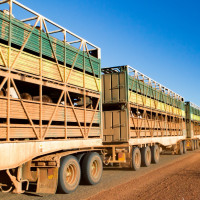
What is the RSPCA doing about transportation of farm animals?
Farm animals are transported within Australia to other properties, saleyards, feedlots, abattoirs and export ports. Some of these journeys may involve distances of thousands of kilometres over several days. Most land transport uses purpose-built trucks, although some rail transport also occurs.
How is the live export trade regulated in Australia?
Exporting livestock for slaughter to foreign countries poses significant risks to animal welfare. These risks are inherent to the trade and include the stress, injury, and illness caused by loading ruminant grazing animals onto ships to be sent on long voyages.
What are the standards of animal welfare onboard live export ships?
Standards for the preparation, loading and confinement of animals for live export are set by the federal government through the Australian Standards for the Export of Livestock (ASEL), which were introduced following the Cormo Express disaster in 2003.
What influences animal welfare at saleyards?
Saleyards are public delivery and collection points to which animals are transported to be sold to the highest bidder and from where animals are then transported to their final destination.
Why is the RSPCA opposed to the live export trade?
The export of live sheep, cattle and goats for slaughter gives rise to multiple serious welfare problems.
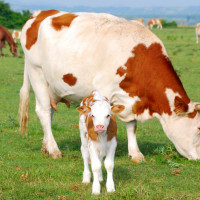
How do young calves cope with transport?
Calves are legally able to be transported at 5 days old or, if transported directly to a calf-rearing facility, at less than 5 days old.
What happens to breeding and dairy cattle exported overseas?
Each year, Australia exports tens of thousands of dairy cattle and breeding animals to countries all over the world to increase and improve local herds through breeding programs. Unfortunately, there are no laws to protect these animals once they leave Australia.
What happens to livestock that are exported for slaughter overseas?
The majority of food animals destined for slaughter overseas are first mustered on their property of origin, then loaded onto livestock trucks, transported to a feedlot or assembly depot, loaded once again onto trucks, transported to the wharf, and loaded onto the ship.
Why should the live export of horses and donkeys for slaughter be prohibited?
The export of any animals for slaughter has serious welfare problems — some relate to transport conditions resulting in stress, disease, injury and death and others relate to a lack of control over what happens to animals in importing countries. These risks are especially high for horses and donkeys.
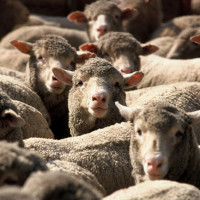
What does the new legislation to end live sheep export by sea mean for Australian sheep?
What is the legislation? On the 1st July 2024 the Australian Parliament passed legislation to end live sheep export by sea. The legislation was introduced as an amendment to the Export Control Act 2020, and sets an end date for the trade by 1st May 2028.