
What is the difference between commercial and non-commercial kangaroo and wallaby shooting?
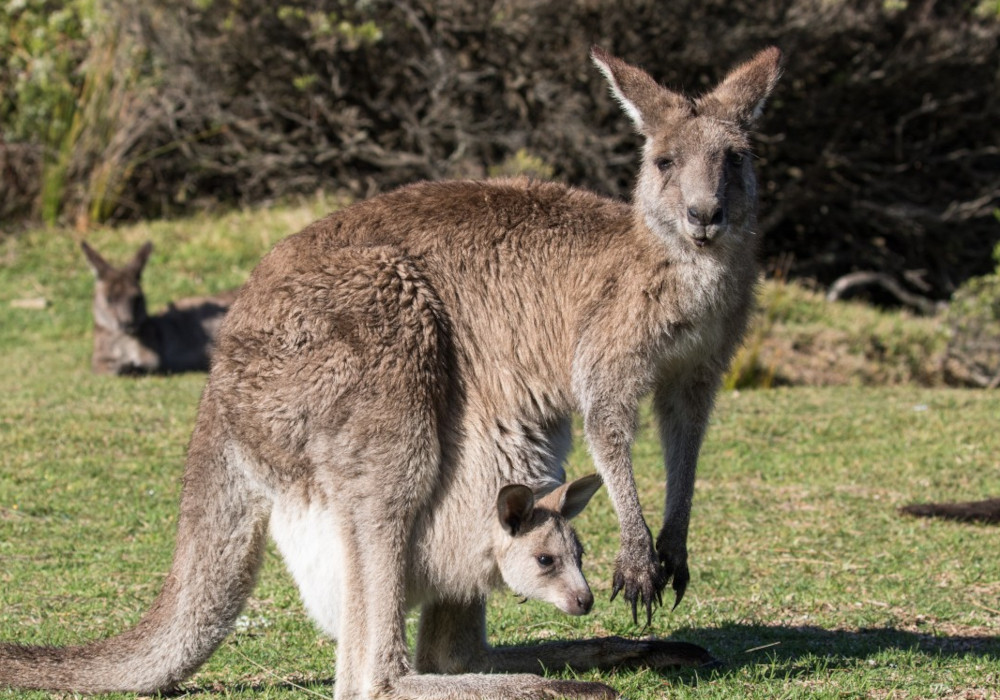
Kangaroos and wallabies are shot in Australia for two main reasons. The first is commercial shooting for the purpose of obtaining meat for consumption and skins, with much of the product being exported overseas. Non-commercial shooting aims to reduce kangaroo (and wallaby) numbers in areas where they compete for pasture and other resources, pose risks to people or damage property. They may also be shot as a euthanasia method if they appear to be suffering, injured, starving, or ill. These forms of shooting are regulated in different ways within Australia and have separate welfare Codes of Practice.
Justification for shooting
Although kangaroos and wallabies are protected native species, they can be shot by licensed commercial shooters or by other shooters, primarily landholders, under permit. Commercial shooting is based on a quota system to ensure kangaroo populations are not threatened and is not directly related to the control of negative impacts from kangaroos. In contrast, landholders applying for permits to shoot kangaroos generally need to report the extent and nature of the damage. Permits stipulate the maximum number of kangaroos that can be shot but the number of actual animals killed and the effectiveness of shooting as a damage mitigation strategy is rarely reported or checked.
National Codes of Practice
Australia has two mandatory national Codes of Practice for kangaroo and wallaby shooting. For commercial shooting the relevant code is the Australian National Code of Practice for the Humane Shooting of Kangaroos and Wallabies for Commercial Purposes (2020) (“Commercial Code”) [1]. All non-commercial shooting is regulated by the Australian National Code of Practice for the Humane Shooting of Kangaroos and Wallabies for Non-Commercial Purposes (2008) (“Non-commercial Code”) [2]. While the two codes are similar, they also have important differences that influence the welfare outcomes of these activities.
Best practice shooting
Kangaroos that are killed by a single shot to the brain will almost always lose consciousness instantaneously and die rapidly, which means any suffering before death will be minimal [3,4]. Kangaroos that are shot in other parts of the body, such as the chest, abdomen, neck, or jaw will take longer to lose consciousness and die, potentially suffering from extreme pain for several days unless a follow-up, accurate shot is taken. Commercial shooters must only use a fatal head shot. Non-commercial shooters who use a rifle must also use a head shot. However, in some circumstances, non-commercial shooters may target the chest instead using a shotgun (see page 4 of the Non-commercial Code). Chest-shot animals are more likely to suffer because they have a higher chance of remaining conscious for a period before death. During this time, they may experience severe pain, panic, disorientation, and breathlessness. The severity and duration of suffering depend on which tissues are damaged and how rapid the blood loss is.
Differences between commercial and non-commercial regulations
A key difference between the Commercial Code and Non-commercial Code is the confirmed proficiency of the shooter. Before they can shoot kangaroos, commercial shooters must pass a competency test and undergo training on their responsibilities under the Code. In contrast, non-commercial shooters are not required to undergo any training or demonstrate their ability as a marksperson. Welfare outcomes for kangaroos will be directly influenced by the competency, experience, and professionalism of the shooter. Non-commercial shooting can be undertaken by landholders, contracted shooters or others. The RSPCA believes that all shooters must have adequate training and be competency assessed in order to prevent animal suffering.
Commercial kangaroo shooters are also subject to more compliance monitoring than non-commercial shooters and must report on the number of adult kangaroos they shoot and collect. Commercial shooters are incentivised to abide by the Commercial Code as kangaroo meat processors will not accept carcasses that have been shot in the body, and shooters can be fined or lose their harvester licence if they repeatedly present non-headshot kangaroos. In contrast, non-commercial shooters are rarely required to report on the number of animals they kill and the carcasses cannot be sold commercially so there is also no secondary oversight to confirm that kangaroos have been killed humanely.
Despite this, compliance monitoring of the commercial kangaroo industry still has substantial room for improvement as the head and neck of the kangaroo are typically removed before the carcass is transported to a processor. This means that it is not possible to distinguish whether an animal died from a single brain shot or was shot in another area such as the face or neck. It is also possible that some commercial shooters may under-report the number of kangaroos killed by a body shot as those carcasses will not be accepted by a processor or those who are maimed and escape. Field compliance monitoring at the point of shooting is rarely conducted for either commercial or non-commercial shooters.
Although some shooters will be conscientious in meeting the requirements of their respective Code, many instances of inhumane shooting practices have been reported, with kangaroos suffering from prolonged and extreme pain. The lack of monitoring and difficulty in apprehending offenders means that those responsible for these acts of cruelty are rarely identified or prosecuted by authorities. A greater effort is required to prevent cruelty to kangaroos and wallabies.
Treatment of orphaned joeys
Under both the Commercial Code and the Non-commercial Code, dependent joeys whose mothers are shot, are also required to be humanely killed. This is because they cannot survive on their own and without intervention, they will likely experience a prolonged death from dehydration, starvation, exposure, or predation. Research indicates that in practice many orphaned joeys are not killed in accordance with the Code [5]. The two current codes were developed more than a decade apart and now differ in their recommendations and approved methods for managing orphaned joeys. Neither Code requires the shooter to report the number of joeys that are affected by shooting operations and there is no monitoring for compliance, therefore the scale of suffering experienced by orphaned young kangaroos and wallabies is unknown.
While the two Codes offer some protection to kangaroos they do not represent best practice and the Non-commercial code, in particular, is long overdue for review, being 12 years older than the Commercial Code. A single Code of Practice is needed that covers all lethal control of kangaroos and wallabies and mandates best practice in order to minimise suffering and safeguard animal welfare. Shooting should only be permitted where the specific situation has been assessed and there is a clear need for population control. Any such shooting must be part of a fully regulated, government-supervised management program. Shooting should only be carried out by competency-tested markspersons with compliance to the code monitored, and outcomes publicly reported.
The information presented here is not intended to be relied on for legal advice and you should seek advice from the relevant authority and/or a lawyer about your individual circumstances.
Relevant podcast
References
AgriFutures Australia (2020) National Code of Practice for the Humane Shooting of Kangaroos and Wallabies for Commercial Purposes. Commonwealth of Australia.
Commonwealth of Australia (2008) National Code of Practice for the Humane Shooting of Kangaroos and Wallabies for Non-commercial Purposes. Endorsed by the Natural Resource Management Ministerial Council [cited 2026 Jan 7].
Descovich K, McDonald I, Tribe A, Phillips C (2015) A welfare assessment of methods used for harvesting, hunting and population control of kangaroos and wallabies. Anim Welfare 24(3):255–265.
Hampton JO, Forsyth DM (2016) An assessment of animal welfare for the culling of peri-urban kangaroos. Wildlife Research 43(3):261–266.
Sharp T, McLeod S (2016) Kangaroo harvesters and the euthanasia of orphaned young-at-foot: applying the theory of planned behaviour to an animal welfare issue. Animal Welfare 25:39-54.
Was this article helpful?

This work is licensed under a Creative Commons Attribution-NonCommercial-NoDerivatives 4.0 International License.