

How do we protect human safety and magpie welfare during spring?
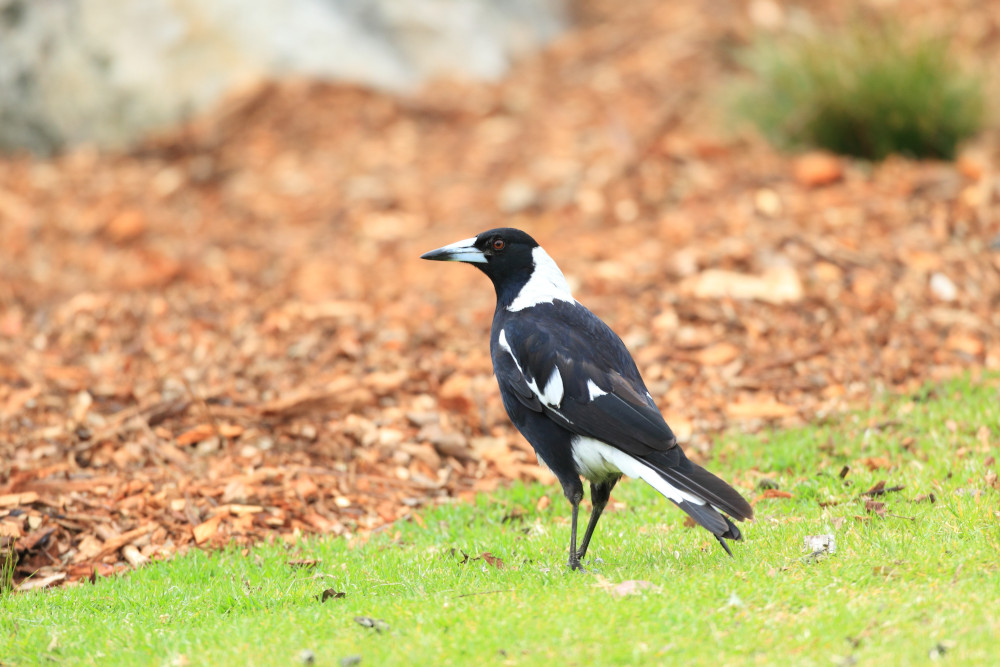
Spring in Australia signals the breeding season for the iconic native Australian magpie, during which male birds may swoop to protect their nests. Although these swoops can be alarming, they are typically brief and targeted, rather than random acts of aggression. With knowledge and simple safety steps, we can reduce the risk to people while helping to safeguard the welfare of the birds.
Understanding natural magpie behaviour
Australian magpies swoop as a defensive response to perceived threats, during the breeding season (approximately six weeks) to protect their nest and young [1]. Outside this period, they are typically peaceful and tolerant of people. Swooping is predominantly done by male magpies and peaks when chicks are close to fledging [2]. This behaviour is not random aggression. Instead, the bird perceives certain humans and animals as potential threats. Cyclists and mail deliverers are more likely to be swooped than pedestrians [1]. Magpies can recognise and remember individual human faces, meaning a person who has previously behaved in a way the bird regards as threatening may be more likely to be swooped in the future [3]. Swooping behaviour mainly involves close dives without physical contact [2]. Serious injuries, although less common, are often associated with eye and facial contact [2].
In addition to the Australian magpie, other birds who may swoop include the laughing kookaburra, red wattlebird, little wattlebird, Australian wood duck, noisy miner, masked lapwing, silver gull, little raven and Australian pelican [4].
When and where does swooping occur?
Swooping usually occurs between August and October, although exact timing may vary depending on the locality [1]. During this period, magpies defend a small area around the nest tree and may swoop pedestrians, cyclists or dogs who pass too close.
Known swooping areas often include shared walkways, parks, cycle paths, and school routes where people frequently enter the birds’ territory [5]. Magpies maintain long-term territories and often use the same nesting sites each year. This means that swooping behaviour, when it occurs, tends to happen in the same predictable locations annually [2].
Staying safe
Given the predictable nature of magpie swooping behaviour, there are several strategies to prevent or minimise risk to humans and dogs.
- It is safest to avoid known swooping areas during the short breeding season, if possible. Warning signs, community alerts, or online mapping tools can help people identify and avoid these zones [6]. Sharing the location of magpies who swoop can help others avoid known swooping areas, as most magpies mate for life in similar locations each year [6].
- Cyclists should dismount and walk through swooping zones, as this reduces the bird’s perception of a threat and reduces the risk of actual magpie contact [1].
- Walking in groups can also reduce the likelihood of being swooped, as magpies more frequently target individuals [5].
- Carrying an umbrella, wearing sunglasses, or using a broad-brimmed hat can offer additional protection for the head and face [5]. Attaching cable ties to helmets may also act as a deterrent [6].
- Yelling or acting aggressively towards magpies may escalate the bird’s defensive behaviour. Destroying nests or harming magpies is unethical and can reinforce their perception of humans being a threat, leading to prolonged or intensified swooping. Moreover, magpies are a protected species under state legislation, which makes it illegal to harm or kill them.
- Anecdotal evidence suggests that providing food may lessen swooping behaviour in magpies who already recognise and are familiar with an individual person, although this effect does not appear to extend to unfamiliar people or to magpies who target cyclists.
Co-existence: preventing harm to people and wildlife
Magpies are an important part of Australia’s ecosystems and urban environments. They are highly social, intelligent birds who form long-term family groups [6]. Swooping is simply a temporary and instinctive behaviour by males protecting their young. By respecting magpie territories during breeding season, making small adjustments such as taking alternate routes, and responding calmly when a magpie is present, people can safely share their environment with these birds. Understanding magpie behaviour leads to safer outcomes for humans and improved welfare for wildlife. Information on magpie behaviour is available from wildlife rescue groups, such as WIRES Rescue (Wildlife Information, Rescue and Education Services) and jurisdiction departments of environment. With awareness, patience, and empathy, it is entirely possible to coexist peacefully with magpies each spring.
References
Warne RM, Jones DN (2003) Evidence of target specificity in attacks by Australian magpies on humans. Wildlife Research 30(3):265-267.
Cilento NJ, Jones DN (1999) Aggression by Australian magpies Gymnorhina tibicen toward human intruders. Emu 99(2):85-90.
Dutour M, Walsh SL, Speechley EM, Ridley AR (2021) Female Western Australian magpies discriminate between familiar and unfamiliar human voices. Ethology 127(11):979-985.
Department for Environment and Water (2025) Swooping birds. Government of South Australia.
Jones DN, Thomas LK (1999) Attacks on humans by Australian magpies: management of an extreme suburban human–wildlife conflict. Wildlife Society Bulletin 27(2):473-478.
Johnsson RD, Connelly F, Lesku JA, Roth TC (2024) Australian magpies. Curr Biol 34(2):R41-R43.
Was this article helpful?

This work is licensed under a Creative Commons Attribution-NonCommercial-NoDerivatives 4.0 International License.