
How are people and dingo (wongari) interactions managed safely on K’gari (Fraser Island)?
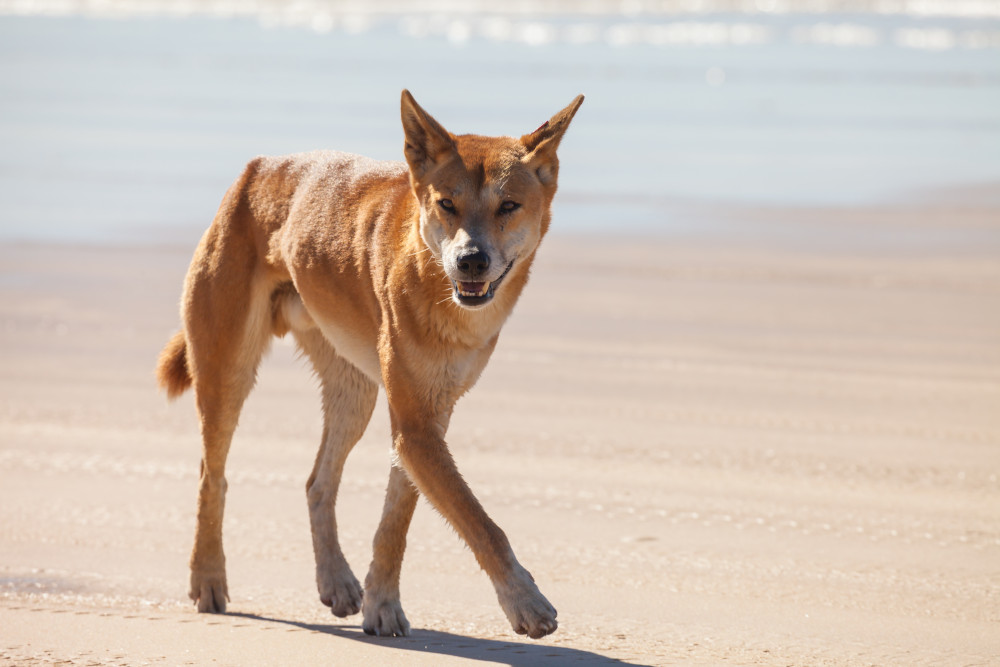
K’gari is the name given to the world’s largest sand island by the Butchulla people, the Traditional Custodians of the area. K’gari is a World Heritage–listed national park off the coast of southeast Queensland and is internationally recognised for its unique landscapes, ecosystems and wildlife. It is a very popular tourist destination and incidents involving the resident population of dingoes (wongari), have occurred sporadically. Significant effort is undertaken to help keep people safe and to preserve the natural life of dingoes to achieve harmonious co-existence. These dingoes are protected by law, which means they must not be harmed or killed unless with justification and permission, in extreme circumstances.
Dingo behaviour
Understanding dingo behaviour is key to implementing effective strategies to help avoid human-dingo conflict. Dingoes in remote areas are self-sufficient and are naturally wary of people. However, on K’gari, wongari become familiar with humans which can inevitably lead to high-risk interactions.
Reducing risks to people and wongari
Management of wongari on K’gari focuses on preventing situations that put both people and wongari at risk. In particular, this means reducing access to human-sourced food, which can lead to food conditioning, loss of wariness and increased conflict [1].
Key measures include:
- Strict bans on feeding wongari
- Securing waste and food storage systems
- Compliance and enforcement activities
- Fencing in high-use areas such as townships, resorts and campgrounds to separate people and wongari
These measures aim to keep wongari wild and minimise the likelihood of dangerous encounters [2,3,4].
In some cases, early intervention may be used for individual wongari showing concerning behaviours. This can include closer monitoring (for example, through tagging or GPS collars) and, where appropriate, the use of nonlethal deterrents. These actions are carried out under approved animal welfare and ethics frameworks [2,4].
Education, communication and visitor behaviour
Education plays a critical role in keeping both people and wongari safe. The ‘Be dingosafe’ program provides clear and practical guidance for visitors and residents, including:
- Staying close to children at all times
- Walking in groups
- Carrying a dingo safety stick outside fenced areas (such as a strong sturdy stick, branch, umbrella or hiking pole to deter and act as a barrier for direct contact)
- Securing all food, rubbish and fishing bait
Rangers deliver this information through onsite briefings, signage, online resources and previsit information. These efforts focus on reducing risky human behaviour, encouraging compliance with regulations, and preventing wongari from becoming habituated to humans or food [5-8].
Ongoing management
Ethical and effective management of human-dingo conflict relies upon engagement and collaboration with various stakeholders including those with animal welfare expertise, as well as First Nations people who place special cultural significance on wongari [9].
RSPCA’s position
RSPCA supports evidencebased and wellregulated management of wongari on K’gari that prioritises animal welfare while also protecting human safety. This includes:
- Preventing food conditioning and habituation
- Focusing on early intervention and nonlethal management where possible
- Regularly reviewing management practices as new research and welfare evidence emerge
- Limiting lethal control to last resort situations
Protecting wongari welfare and keeping people safe are not competing goals, both depend on responsible human behaviour and effective, humane management.
References
Appleby R, Mackie J, Smith B, Bernede L, Jones D (2018) Human-dingo interactions on Fraser Island: an analysis of serious incident reports. Australian Mammalogy 40(2):146-156.
Queensland Government (2013) Fraser Island Dingo Conservation and Risk Management Strategy.
Queensland Government (2014). Fraser Island Dingo Conservation and Risk Management Strategy: Implementation Plan.
Tapply J (2018) Contemporary dingo management on K’gari. Australasian Journal of Environmental Management 25(1):119-131
Behrendorff L, King R, Allen BL (2023) Efficacy of Management Efforts to Reduce Food-Related Dingo–Human Interactions and Conflict on K’gari (Fraser Island), Australia. Animals 13(2):204.
Queensland Government (2020) Independent expert review and response to the FIDCRMS Implementation Plan.
Queensland Government (2025). Fraser Island Dingo Conservation and Risk Management Strategy. Brief Overview.
Queensland Parks and Wildlife Service (2025). Be dingo-safe on K’gari: Visitor information.
Carter J, Wardell-Johnson A, Archer-Lean C (2017) Butchulla perspectives on dingo displacement and agency at K’gari–Fraser Island, Australia. Geoforum 85:197–205.
Was this article helpful?

This work is licensed under a Creative Commons Attribution-NonCommercial-NoDerivatives 4.0 International License.