

Where can I get my backyard chickens?
Often, people who keep backyard chickens need to make a decision about acquiring a new bird. Usually all works out well; both parties (buyer and seller) are happy, and the chicken does well in their new home. But this is not always the case.
You may be able to obtain a new chicken from a produce store/agency, a pet shop, a breeder, or a friend or relative. You may be able to adopt a pet chicken from a shelter (such as the RSPCA) or rescue group.
Live poultry offered for sale are usually classified into one of the following age groups:
- Day-old chick: A chick who will be sold within a few days of hatching (not always exactly one day old). It’s possible to tell the sex of some breeds as soon as they hatch, while other breeds cannot be sexed until they are a few months old. This is the cheapest way of buying chickens but carries the risk that you may end up with a rooster when you didn’t want to!
- Chick: A young bird within their first few weeks of life.
- Point of lay (POL): A hen who is old enough to start laying eggs, usually around 3-4 months old.
- Pullet: A hen who is under one year of age. These are more expensive, as they are known layers.
- Mature: A bird over one year old. Mature poultry are usually sold when their owner decides to downsize their flock, change breed, or no longer keep poultry.
Rescue chickens are usually obtained from commercial farmers who are seeking to cull less productive birds. The typical life expectancy of a chicken ranges from four to 12 years; a hen’s egg production will decrease and eventually stop as she ages, but she may live for years after she stops laying eggs. The life expectancy of chickens will depend on the breed. Commercially bred chickens such as Isa Browns have a much shorter life expectancy than traditional purebred poultry, and so are ‘moved on’ by farmers when they no longer meet their production requirements. However, these hens can be a wonderful addition to a backyard flock. They may be in poor condition when they are rescued (thin, with few feathers and red/irritated/damaged skin from pecking, etc) but with the right care can recover well and live for years as backyard hens (although not all will live for a long time, they can still enjoy what time they have).
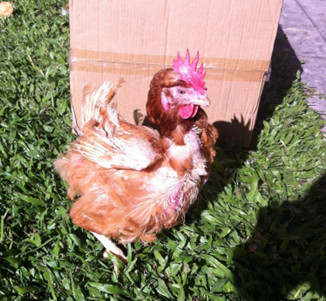
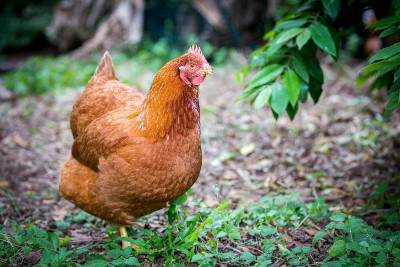
Margarita — a lovely Isa Brown chicken who was a rescue from a commercial farm cull (the top photo is the first day when she got to her new home out of the cages). She went on to have a long and happy life as a backyard chicken (photo on the bottom shows her happy and healthy and fully feathered, confident and enjoying life a few months later).
Regardless of where you go, only purchase poultry from the seller if:
- The chickens are kept in a clean enclosure with recently changed bedding.
- The enclosures are not overcrowded.
- The chickens are fed a commercial diet (this ensures they receive all of the required nutrients to stay healthy).
- All of the chickens have access to water.
- The chickens look healthy (note: some chickens may look scruffy because they are moulting. It’s normal for chickens to moult once per year. Ask the seller if you’re not sure whether a chicken looks scruffy because they are unhealthy or moulting).
- They have been wormed regularly with an effective product.
Poultry suppliers other than large commercial enterprises rarely vaccinate their chickens. This is not a sign of poor husbandry – it is commercially non-viable to vaccinate properly on a small scale.

Registered Specialist in Bird Medicine
RSPCA Australia believes that captive-bred wild animals should not be kept in a home environment or for companion purposes unless the species has been clearly identified as being suitable for this purpose. It is important that animals living in a home environment can live a good life. This means providing for their physical health and ensuring opportunities to fully express their individual interests and experience good welfare. Inadequate care and husbandry are reported to contribute to common and serious welfare compromises in many captive wild animals living in home environments. For more information see our policy.
The reality is, however, that captive-bred wild animals are kept in home environments despite sometimes not meeting these criteria (e.g., some reptile and bird species). Because of this, the RSPCA has produced these articles on the care and welfare of a variety of commonly kept captive-bred wild animals. The aim is to help people better understand their animals as individuals and provide them with care that keeps them healthy and provides opportunities for positive mental experiences as much as possible in captivity.
Wild animals must not be taken from the wild to be kept as companion animals (pets).
Was this article helpful?

This work is licensed under a Creative Commons Attribution-NonCommercial-NoDerivatives 4.0 International License.