
How can I create low‑cost DIY enrichment for my cat or dog?
Source: RSPCA NSW
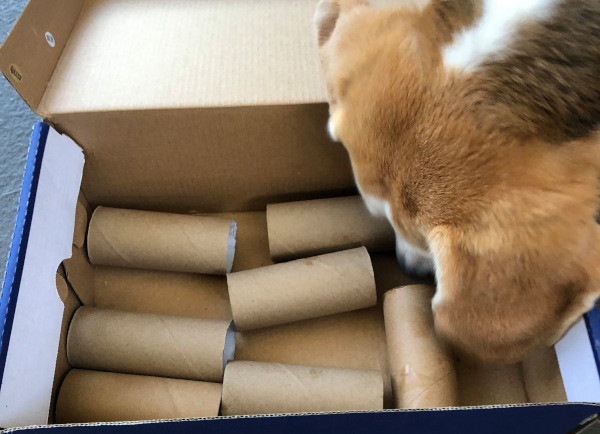
A dog investigates a box filled with treats hidden inside empty cardboard tubes, engaging in a simple enrichment activity that encourages foraging and curiosity.
Keeping our companion animals healthy and happy is essential for a harmonious life together. A key part of this is providing opportunities for pets to engage in natural behaviours, such as exploring, playing and problem-solving - activities which are often limited in a home environment. Enrichment addresses this by providing activities that help stimulate your pet’s mind, body, and senses, supporting both physical and mental wellbeing.
When selecting enrichment, you should consider your pet’s needs, individual preferences, and ensure all activities and items are safe and appropriate. Providing a variety of enrichment options and rotating them regularly helps sustain interest. And while store-bought toys can be expensive you can reduce costs by providing simple and effective enrichment activities made at home using low-cost materials.
Types of enrichment
There are various forms of enrichment, including:
- Cognitive/behavioural – activities which involve mental stimulation, such as training, problem-solving, and memory tasks
- Environmental – exposing an animal to environmental stimulation, such as toys, walks, and trips to the park
- Feeding – activities which involve chewing or feeding, such as puzzle feeders or toys filled with food
- Scent – exposing an animal to novel scents to increase engagement, such as via snuffle mats or scented toys
- Sound – exposing an animal to sound such as music for sensory stimulation
- Social – engagement with other living beings (same species or different species, including people)
- Tactile – activities that involve touch and sensory experience, such as exploring different textures (e.g. bedding, toys, scratchers, and lick mats)
Why are enrichment activities so important?
It is well known that domestic pets have descended from wild animals: cats from wild cats, and dogs from wolves. Based on their evolutionary history, our domestic pets are now living in environments which can be considered inadequate. As such, enrichment is one way to allow them to express their natural behaviours, such as sniffing, playing, and exploring, in a home environment.
An animal’s enrichment needs may differ based on a specie’s natural behaviours; for example, natural dog behaviour includes scent detection and foraging, while natural cat behaviour includes activities like climbing and scratching. Individuals within the same species may also have different preferences; for example, some cats and dogs are more food or toy motivated than others.
There are also many benefits to enrichment extending beyond natural behaviours. For example, enrichment has been shown to promote relaxation, positive wellbeing, reduction in stress and anxiety (including in times of acute stress), strengthen connections with care givers, improve resilience, and reduce boredom related behaviours, such as chewing furniture or pacing [1,2,3,4].
What should I consider when selecting enrichment activities for my cat or dog?
Enrichment activities are a fun and effective way to stimulate pets both mentally and physically. However, when choosing or designing enrichment, it’s important to look beyond an animal’s individual or species-specific preferences. Safety and suitability should always be key considerations.
Some enrichment activities including certain store-bought toys may pose a health or safety risk to pets [5]. In absence of standardised safety regulations for cat and dog toys in Australia, owners need to carefully consider whether the enrichment their pet engages with is safe.
To help minimise risks, ensure that any enrichment activity or toy meets the following criteria:
- Materials used are safe, appropriate and durable (e.g. non-toxic, unlikely to cause injury if chewed or damaged).
- Size is suitable for the pet to prevent choking or accidental ingestion.
- There are no sharp edges, loose parts, or components that could splinter, break-off, or become entangled.
- The activity is appropriate for the animal’s age, health status and playing style.
- Pets are supervised when engaging with enrichment activities (This is especially important when introducing new enrichment items, DIY or soft toys, rope/string containing toys, chew toys, or any items with small parts, which pets may chew, shred, or swallow.)
- Owners are advised to regularly inspect, clean, and disinfect toys to ensure they remain in good condition and safe for continued use.
Most pets also benefit from having access to a variety of different enrichment options [6]. To achieve this, owners may choose to rotate through a few activities to keep things interesting. However, some commonly perceived barriers to providing a variety of enrichment options include limited space, lack of time or opportunity, and financial constraints [7]. These challenges can be partly addressed by creating simple, low-cost enrichment activities using items already available at home, for example, cardboard boxes or tubes, paper bags, empty egg boxes, baking trays, old t-shirts or towels.
Enrichment does not need to be fancy or expensive for pets to benefit from and enjoy.
DIY low-cost enrichment ideas
Below are some simple, low-cost, DIY enrichment ideas to try with your pet.
Feeding enrichment
NOTE: with all feeding enrichment activities, there is a risk of weight gain. Always provide food enrichment as a part of your pet’s daily food allowance. This may involve using part of or all of their regular meal and providing it in a stimulating way instead of in a food bowl.
Puzzle feeders are great at slowing down fast eaters while combining cognitive and scent enrichment.
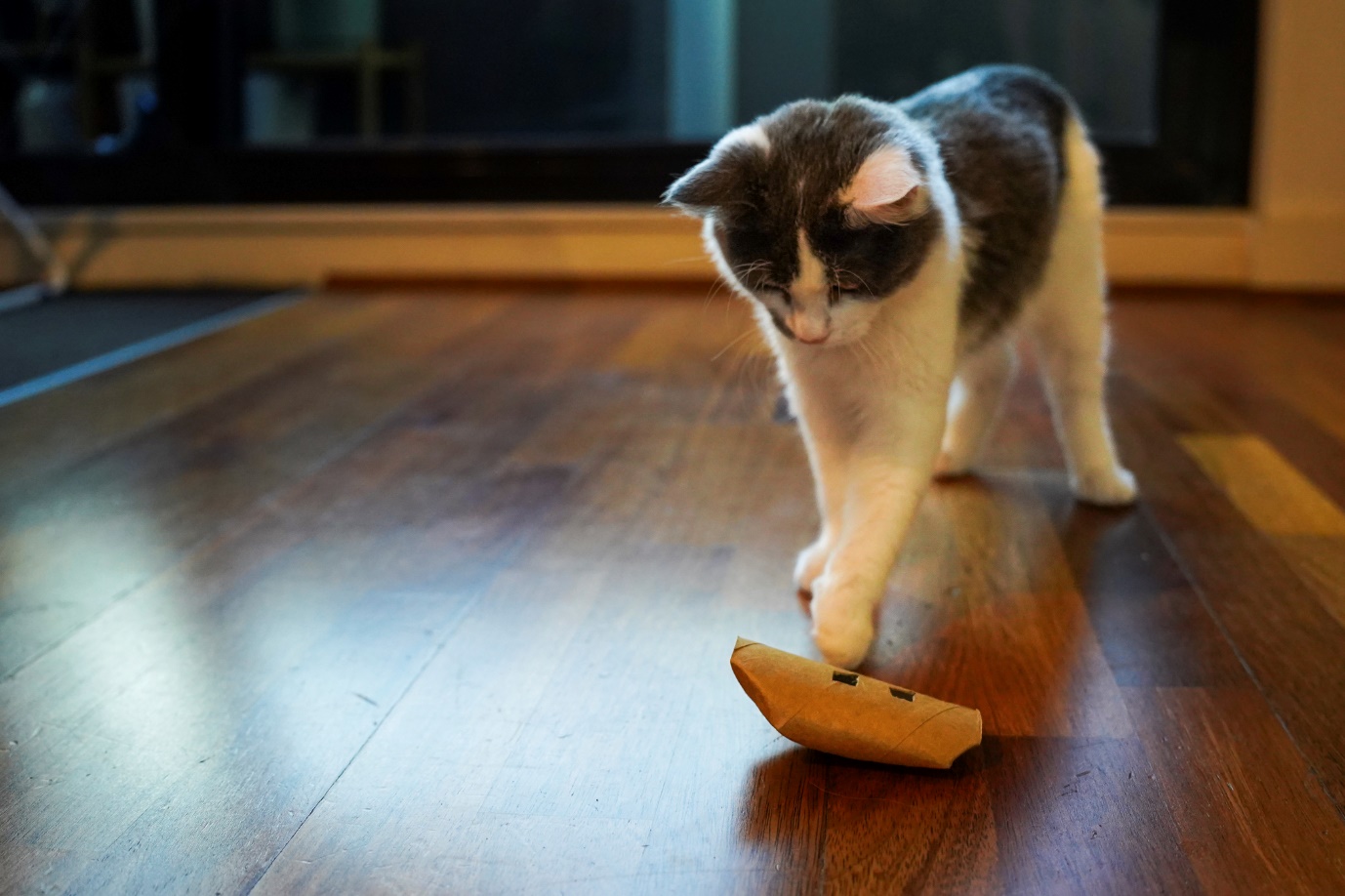
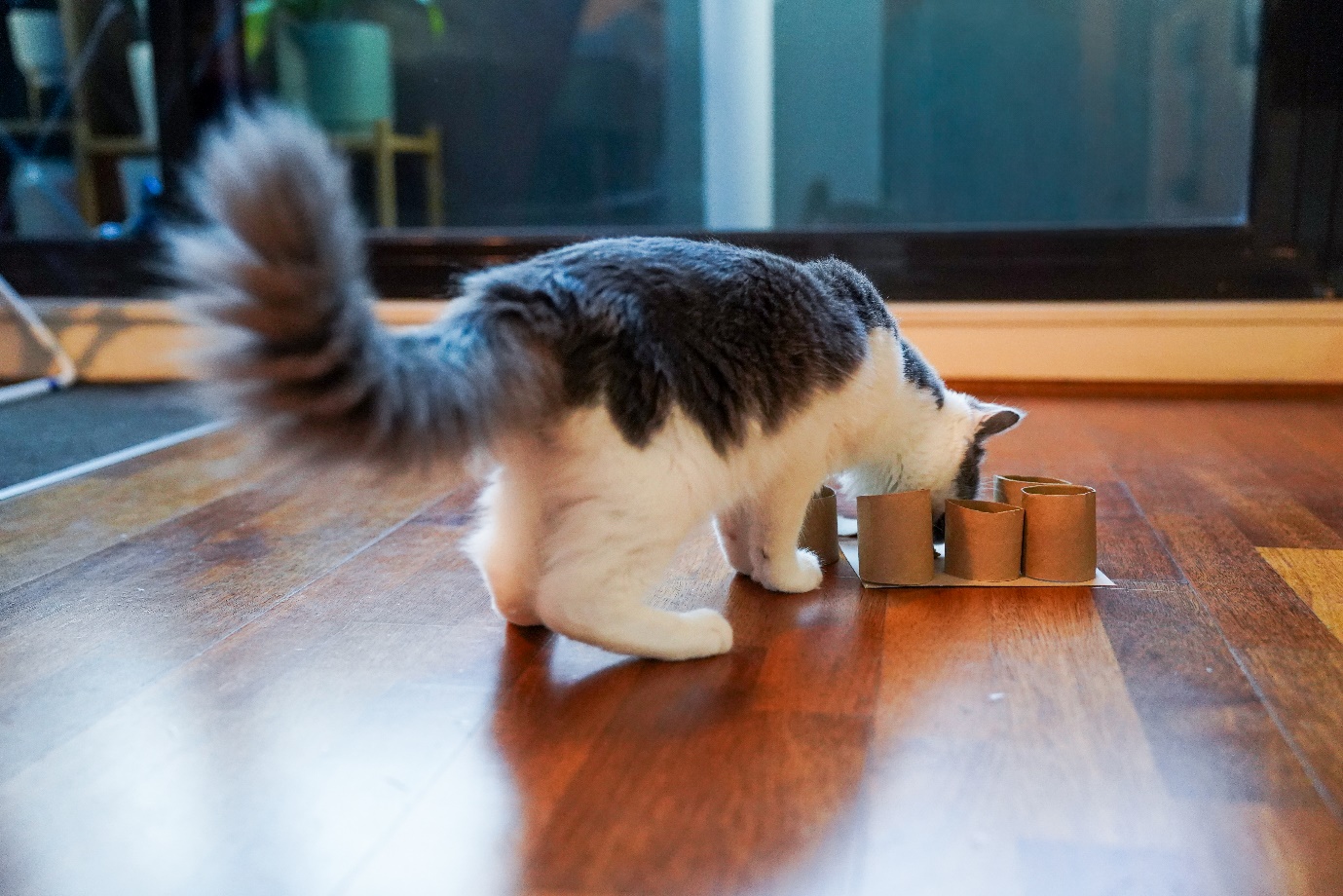
- Cats: using a toilet roll, cut some small holes into the body of the roll. Fold and tape one end of the tube together, before filling the toilet roll with some kibble or treats. Then fold and tape the other end of the toilet roll together to enclose the treat. Cats will be able to roll the toilet roll around to release the food-reward from the little holes in the body of the roll. Alternatively, you can also use a cardboard box.
Source: Rosemary Pitty, RSPCA NSW.
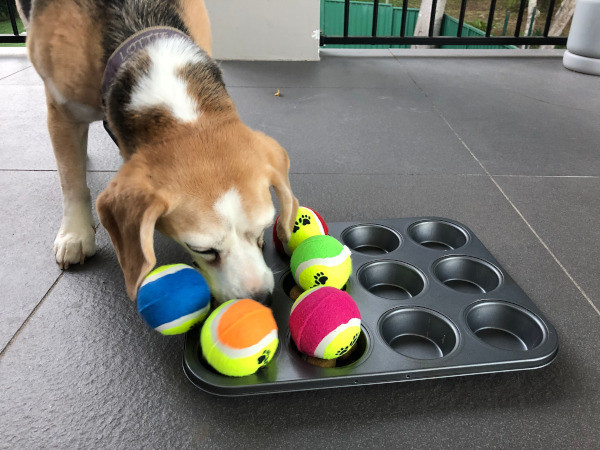
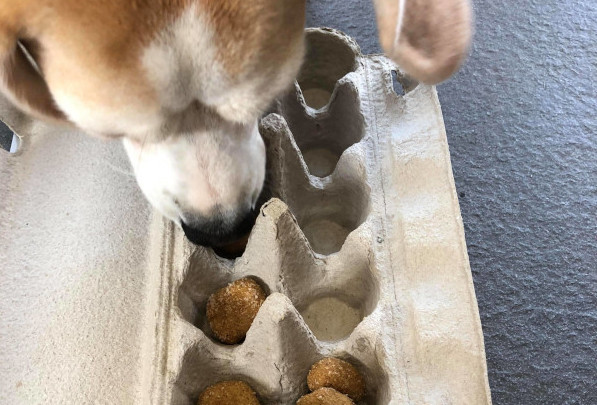
- Dogs: using a muffin tin, place some kibble or treats into each well. Next, place a ping pong ball (small dogs) or tennis ball (medium-big dogs) into each muffin well on top of the treats and place the muffin tray on the floor for the dog. Dogs will need to use their snout or paws to manoeuvre the balls away and access the food-reward. Alternatively, for dogs who have difficulty concentrating on the activity when balls are present, treats can be hidden under other objects such as toys, scrunched paper or cardboard. Owners who do not have a muffin tin can instead use an empty egg box, and leave the treats uncovered to make the activity simpler.
Source: RSPCA NSW.
Source: RSPCA NSW.
Source: RSPCA NSW.
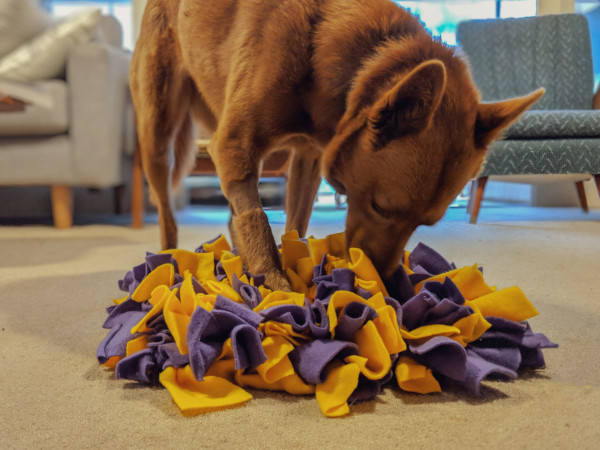
Snuffle mats are another simple and effective form of feeding enrichment that can be easily made at home using old towels, T‑shirts, or fleece.
Treasure hunt activities engage natural behaviours such as sniffing and exploration to seek out a food-reward.
- Cats: scatter a small handful of treats or kibble in an open room and let the cat into the room to look for them. Alternatively, hide treats or kibble around the room in pet-safe spots to make the activity harder for cats who complete the activity too easily.
- Dogs: scatter or hide a small handful of treats or kibble in an open room or on dog-safe lawn (i.e. not treated with pesticides) for the dog to look for. If outdoors, the activity may be completed in a safe and enclosed area, such as a backyard, so the activity can be completed off-lead and at the dog’s own pace.
NOTE: These types of activities are a simple way to keep pets engaged and occupied when they are home alone.
Source: Rosemary Pitty, RSPCA NSW.
Simple DIY puzzle feeders using toilet rolls can encourage natural foraging behaviours in cats and dogs.
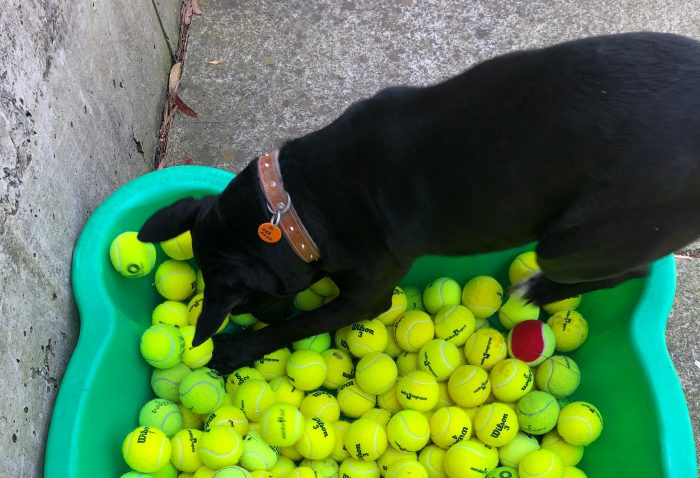
Treats hidden among tennis balls in a paddling pool can also serve as a simple alternative to a backyard treasure hunt.
Frozen treats can help your pet stay cool on a warm day while providing both enrichment and extra hydration. The slippery texture of ice can also make it a fun object for pets to bat around and play with.
- Cats: place a small treat into each well of an ice cube tray. Fill the ice cube tray with water or broth from tinned tuna or tinned salmon for extra flavour. Freeze for 8 hours or overnight.
- Dogs: place a small treat into each well of an ice cube tray (small dogs) or muffin tray (medium-big dogs). Fill the tray with water, or a low-salt bone broth for extra flavour. Alternatively, use some pureed pet-safe fruit or vegetables, such as banana or pumpkin with added water to loosen the texture up. Freeze for 8 hours or overnight.
Environmental and sensory enrichment
Play: providing engaging toys that suit your pet’s preferences can help to encourage them to play [8].
- Cats – paper ball: scrunch up a piece of paper into a ball and hide a few treats inside for cats to sniff out and discover.
- Dogs – rope toy: using some old fabric or t-shirts, cut them into long strips and tie them together with knots to form 3 long fabric strips. Knot the 3 long fabric strips together at the top and braid down the length of the fabric strips until nearly at the bottom before tying it off into another knot. Hide some treats between the braids for dogs to sniff out.
Alternatively: use 2 long fabric strips and twist them together into a rope.
Sensory: Providing auditory, olfactory, visual or tactile stimulation to encourage natural behaviours.
- Smell: Cats and dogs are known to be more likely to engage with a toy or activity if there are desirable scents involved [9,10]. To utilise pleasant odours on a toy, a small amount of the pet’s favourite foods such as fish, chicken, wet food, banana, or boiled pumpkin can be rubbed onto a toy (store-bought or DIY). For cats you can also use catnip or silvervine sticks.
- Sight: Placing a soft blanket by a window or on the windowsill, as a designated cozy spot for people/animal-spotting and watching the world go by.
- Sound: Putting the radio or tv on or other sounds for the pets to listen to (e.g. audio of birds chirping, ocean waves, white noise). This is especially useful when the pet is home alone or to drown out undesirable sounds in the background (e.g. construction, fireworks).
- Texture: Cats and dogs are highly tactile animals that experience much of their world through touch. By offering a range of textures such as different toys, bedding, scratching surfaces and activity feeders you can stimulate their paws, whiskers, and skin providing important mental and physical engagement.
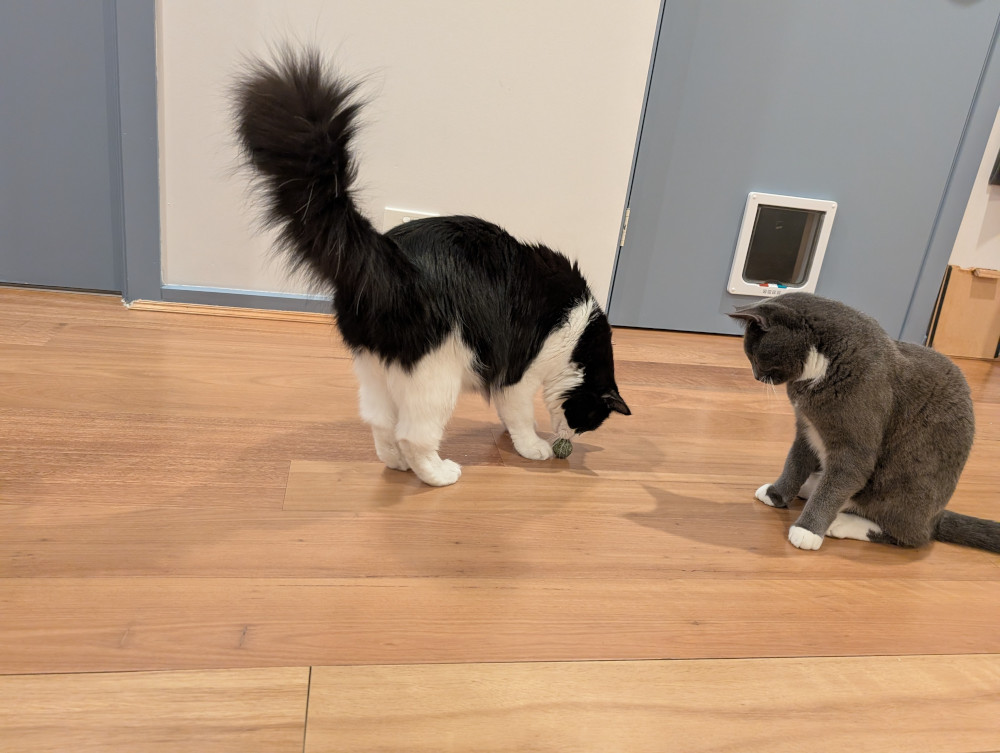
Source: Karen Widdowson, RSPCA Australia.
Catnip offers excellent sensory stimulation for cats by engaging their sense of smell and encouraging playful behaviour.
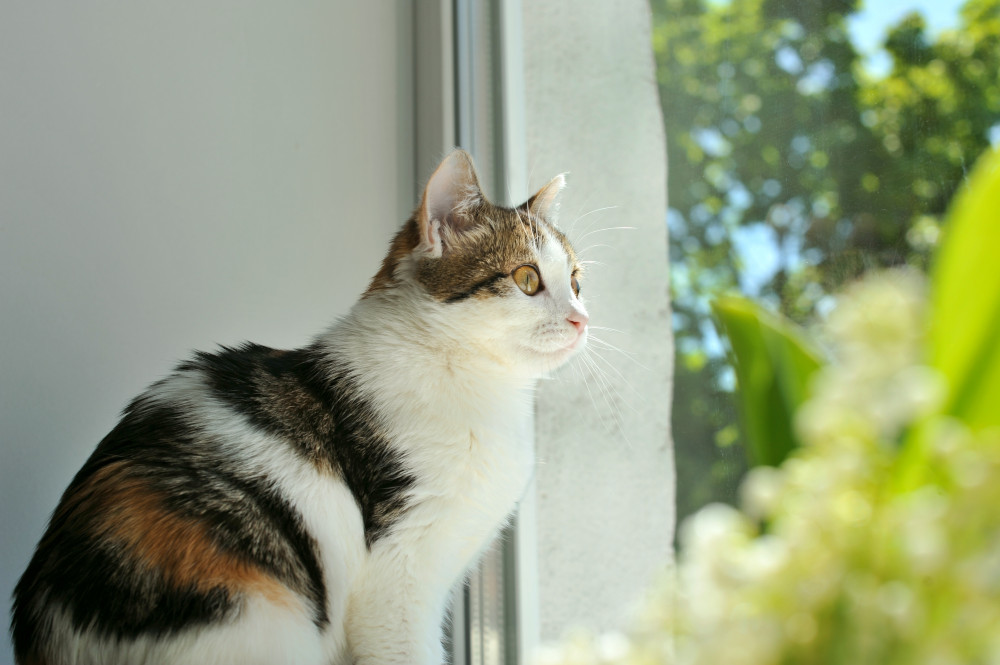
Being able to watch the world go by from a cosy window spot is a great way to provide your cat with visual stimulation.
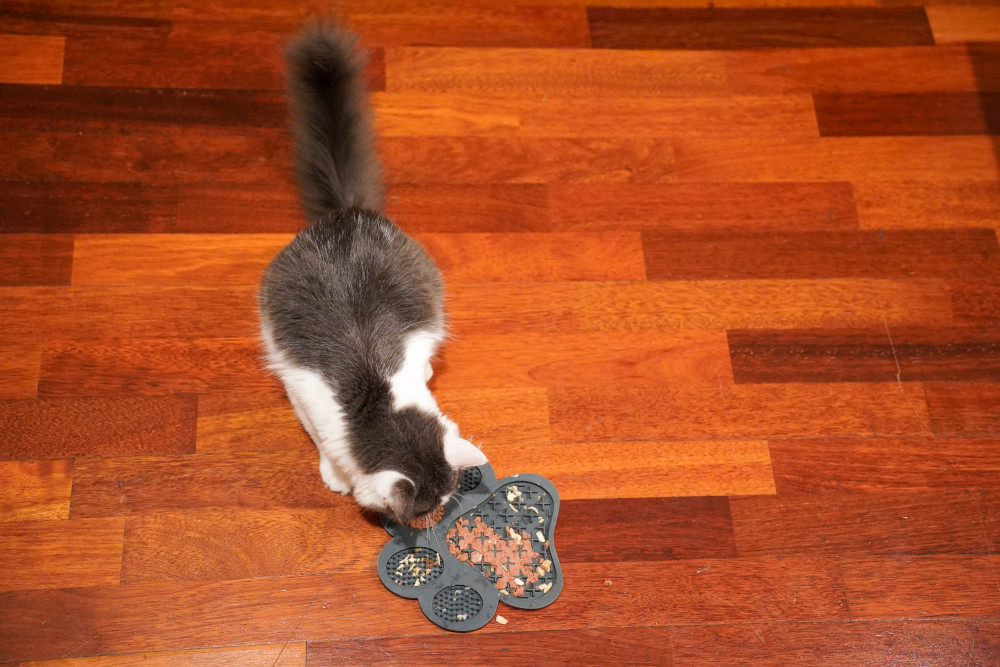
Source: Rosemary Pitty, RSPCA NSW.
Lick mats are a simple way to provide sensory enrichment for pets,offering tactile stimulation through a variety of textures.
Enrichment activities play an important role in allowing pets to express their natural behaviours and support their physical and mental wellbeing. However, enrichment activities alone cannot replace the time pets spend interacting with the people who care for them, or where appropriate, other animals. Combining enrichment activities with owner participation and play can strengthen the human-animal bond, create opportunities for shared enjoyment and help guardians better understand their pet’s needs, preferences and behaviours.
References
Hubrecht RC (1993) A comparison of social and environmental enrichment methods for laboratory housed dogs. Applied Animal Behaviour Science 37(4):345–361.
Willen R M, Schiml P A, Hennessy MB (2019) Enrichment centered on human interaction moderates fear-induced aggression and increases positive expectancy in fearful shelter dogs. Applied Animal Behaviour Science 217:57–62.
Dare P, Strasser R (2023) Ruff morning? The use of environmental enrichment during an acute stressor in kenneled shelter dogs. Animals 13(9):1506.
Heys M, Lloyd I, Westgarth C (2024) 'Bowls are boring': Investigating enrichment feeding for pet dogs and the perceived benefits and challenges. The Veterinary Record 194(4):e3169.
Veeder C L, Taylor D K (2009) Injury related to environmental enrichment in a dog (Canis familiaris): gastric foreign body. Journal of the American Association for Laboratory Animal Science 48(1):76–78.
Hunt R L, Whiteside H, Prankel S (2022) Effects of environmental enrichment on dog behaviour: pilot study. Animals 12(2):141.
Desforges E (2021) Challenges and solutions surrounding environmental enrichment for dogs and cats in a scientific environment. Animals 11(10):2980.
Boonhoh W, Saramolee P, Sriphavatsarakom P, Amaek W, Waran N, Wongtawan T (2024) Preference of dogs towards feeding toys made of natural rubber, and their potential to improve canine behaviour: a study based on owners’ observations. Applied Animal Behaviour Science 270.
Webberson E, Stellato A C, O’Hanley K A, Zhang L, Aviles-Rosa E O (2025) Sniffing for fun: evaluating the effect of olfactory enrichment on cats’ toy preference and interaction. Applied Animal Behaviour Science 285.
Sonowal R, Cisneros A, Hall N J, Stellato A C (2024) The influence of scented toy enrichment on owned dog activity levels in a household setting. Applied Animal Behaviour Science 281.
Was this article helpful?

This work is licensed under a Creative Commons Attribution-NonCommercial-NoDerivatives 4.0 International License.