
Is there a need to kill kangaroos?
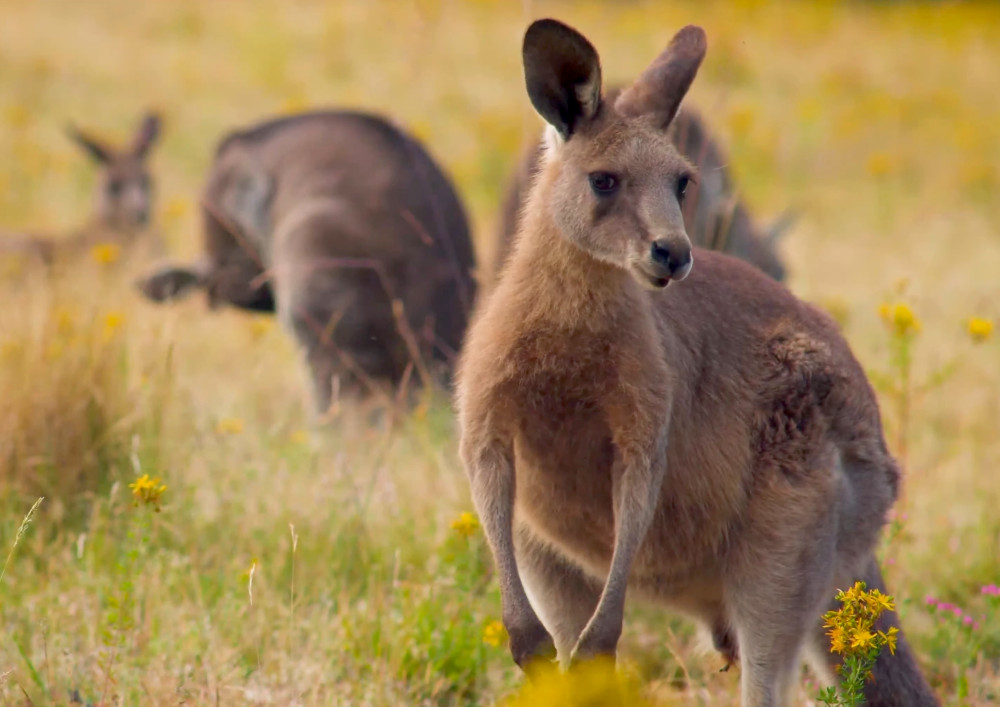
Kangaroo populations vary widely across Australia and can reach high local densities due to a range of factors, particularly when food and water are abundant. It may sometimes be considered necessary to control populations of kangaroos for animal welfare or damage mitigation reasons. Environmental conditions influence kangaroo numbers and population density in combination with broadscale human activity, such as traditional farming practices, provision of artificial water sources, and land clearing. When droughts occur, kangaroo mortalities increase and birth rates decrease leading to overall lower numbers. However, local population densities may increase as kangaroos congregate around food and water sources.
Reasons for killing of kangaroos
Kangaroos (and some wallabies) are killed for either ‘commercial harvesting’ – shooting for meat and skin – or for ‘damage mitigation’ – shooting to reduce numbers where kangaroos compete for pasture and other resources or pose risks to people or property. While both activities affect kangaroo populations, they can be regulated by different government departments.
In the five states where commercial harvesting is carried out, annual harvesting quotas are set as a percentage of kangaroo abundance, based on population surveys. In commercial harvesting kangaroos are viewed as a resource and are targeted by shooters based on product suitability, as judged by size and a healthy appearance.
In contrast, damage mitigation and other non-commercial shooting is carried out when there is a real or perceived impact. This is most common when kangaroos directly compete with farmed animals on pastoral land but can also occur for other reasons, such as when kangaroos are not able to access sufficient food or water, creating welfare issues, or to protect an endangered species in a protected habitat [1].
While commercial harvesting and damage mitigation could hypothetically be integrated so that kangaroos are commercially harvested from areas that require population management, in practice these two processes are largely separate.
Concerns around kangaroo shooting
The RSPCA opposes the killing of kangaroos and other wild animals for commercial utilisation (see RSPCA Policy E4.3), unless it forms part of an animal management program that aims to reduce adverse impacts caused by wild populations. Acceptable animal management programs should meet a range of specific criteria to ensure firstly that they are necessary, and then that they are also humane, adequately monitored, and transparently reported (see RSPCA Policy E2). Measures to reduce kangaroo populations should first be proven to be necessary with proper consideration for the reasons for control. They must be conducted humanely and competently and be under the direct supervision of an appropriate government authority as part of an approved kangaroo management program. Effective monitoring, auditing and reporting of such programs is vital to ensure these conditions are met.
Currently, lethal management of kangaroos fails to meet a number of these conditions. For example:
- It is impossible to know how many kangaroos are shot either humanely or inhumanely each year, as there is no monitoring of activities and outcomes at the point of shooting for either commercial or non-commercial shooting.
- Statistics on how many joeys are killed or impacted are generally not collected for either commercial harvesting or damage mitigation activities. However, Victoria does report joey euthanasia numbers from commercial harvesting and these statistics indicate that 2-3 joeys are impacted for every 3 female kangaroos shot [2]. These joeys will either be killed by the shooter, which is a requirement under the relevant codes of practice, or they will die from predation, exposure, dehydration, or starvation. The suffering caused when females with dependent young are shot is a significant concern. Shooters need to be adequately trained to ensure orphaned joeys are humanely killed and many shooters may be reluctant to kill joeys [3]. Standard operating procedures have been included in the most recent commercial kangaroo shooting code of practice [4]. However, the non-commercial code of practice does not [5] and its requirements on this issue are insufficient.
- All shooters should be monitored to ensure compliance with the codes, and shooting should only be permitted by people who have been assessed to be competent using a firearm. Currently there is no requirement for shooters killing kangaroos for damage mitigation purposes to demonstrate they are competent.
- The process of quota setting and site selection for commercial harvesting of kangaroos is not based on damage mitigation and therefore does not form part of an integrated animal management program.
Until these issues are properly addressed, questions will remain about the necessity and humaneness of lethal kangaroo management. For circumstances when kangaroo population control is sufficiently justified, the RSPCA advocates for the on-going development of humane and effective alternatives to replace lethal methods.
Relevant podcast
References
Gordon I, Snape M, Fletcher D, Howland B, Coulson G, Festa‐Bianchet M, et al. Herbivore management for biodiversity conservation: A case study of kangaroos in the Australian Capital Territory (ACT). Ecol Manag Restor. 2021;22:124–37.
The State of Victoria Department of Energy, Environment and Climate Action. Kangaroo Harvesting Program Annual Report 2024 [Internet]. 2025.
McLeod S, Sharp T. Improving the humaneness of commercial kangaroo harvesting. Final report for RIRDC Project No PRJ-004103 [Internet]. Rural Industries Research and Development Corporation; 2014.
AgriFutures Australia. National Code of Practice for the Humane Shooting of Kangaroos and Wallabies for Commercial Purposes [Internet].
Commonwealth of Australia. National Code of Practice for the Humane Shooting of Kangaroos and Wallabies for Non-commercial Purposes [Internet]. Endorsed by the Natural Resource Management Ministerial Council; 2008 [cited 2026 Jan 7]. Accessed 7 Jan 2026.
Was this article helpful?

This work is licensed under a Creative Commons Attribution-NonCommercial-NoDerivatives 4.0 International License.