

What is the most humane way to kill a cane toad?
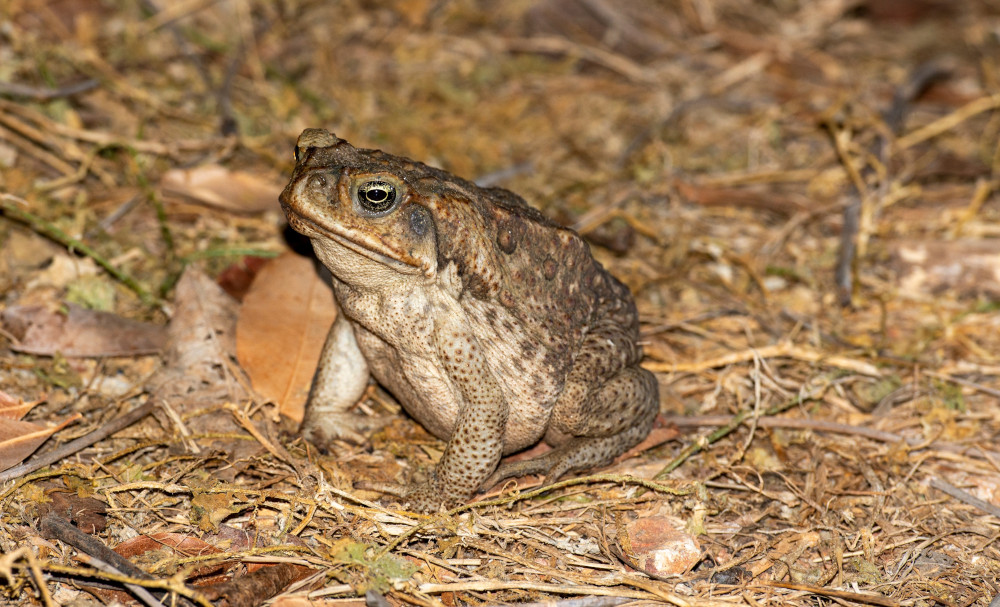
Cane toads are a highly invasive species and are regarded as a major environmental pest in Australia. While there is universal agreement over the need to control cane toads, there is significant debate over what is the most humane method to use. This is largely due to the limited research into the impact of killing methods on toads, compounded by the fact that it is difficult to measure pain and distress in amphibians through observation alone.
Background
Thousands of cane toads are killed every year in Australia by government and community groups and individuals, using many different (and sometimes inhumane) methods. Irrespective of the fact that cane toads are considered pests, they are also capable of experiencing pain and distress and so any measures to control them must not cause suffering. It is the responsibility of both governments and the community to ensure that only humane methods are used.
The unfortunate reality is that there are very limited humane practical methods available for use by the general public. Most currently recommended methods either require special equipment or operators to be trained and skilled. To this end, community-based training programs on humane killing would help to ensure that members of the public were able to learn safe, effective and acceptable techniques.
What killing methods are being recommended?
In 2011, the Australian Government released the Standard Operating Procedure for the Humane Field Euthanasia of Cane Toads (SOP) which was based on a comparative study of the humaneness of a range of different cane toad killing methods [1]. However, this SOP has not been updated and so omits some recently developed and evaluated methods, but it still contains some useful information. No methods are listed in the SOP as unconditionally acceptable, thus highlighting the need for more research to develop a humane killing method for cane toads.
The following method is the most humane currently available to the general public:
- Cooling and then freezing – one study has shown that this method may be more humane than other methods [2, 3]. It involves placing the toad in a plastic bag or container ensuring that there is sufficient cool air around each individual toad to allow for uniform cooling and freezing (e.g. place toads individually in containers). Place the container(s) in the fridge at 4°C for 12 hours, and then after ensuring the toad is not moving (it is effectively anaesthetised), transferring it to a freezer (-20°C) for at least 24 hours to painlessly kill the toad.
Gloves must always be worn when handling toads. Toads must be confirmed dead before disposal.
Another method, which is listed as conditionally acceptable is:
- Hopstop® – this is an aerosol spray that has been specifically developed for killing cane toads and is commercially available for this purpose. When applied in sufficient quantity (i.e. at least two sprays per toad) it appears to be effective and easy to use but some toads may show signs of pain and distress after its application. Although Hopstop® contains the same active ingredient found in Dettol (which causes extreme skin irritation and pain), it also contains a chemical which reduces but may not eliminate this irritation. Dettol is considered inhumane and should not be used. Information on where to purchase Hopstop® is provided through the manufacturer’s website. It is very important that each toad is treated with sufficient spray to ensure death. The SOP recommends that after spraying, the toad is closely observed and once movement ceases, a second spray must be applied. Two hours after spraying, toads must be confirmed dead before disposal.
Note: Another spray on product containing eugenol (e.g. Croaked®) is not recommended to use as recent studies indicate that some toads can experience extreme suffering prior to death.
The following methods MUST ONLY be used by trained and competent operators:
- Stunning followed by decapitation can also be used to kill individual cane toads, but this method is only suitable for use by confident and skilled operators with the correct equipment and technique. This method must not be used unless those involved have received appropriate training, as ineffective stunning or unskilled decapitation will result in an inhumane death.
- Prolonged exposure to carbon dioxide is the most commonly used method for killing multiple cane toads at a time. This method must only be used by trained operators using appropriate equipment. Death must be confirmed prior to disposal.
Unacceptable methods
The following methods are not acceptable as they are considered inhumane and may breach animal welfare legislation: Dettol, clubbing or drowning.
The establishment of cane toad control centres where the public can deliver toads for humane killing by trained operators would help prevent inhumane methods being used as well as assist people who are unable to kill cane toads themselves. Such centres would require community and government support.
Research
Research is being undertaken on the development of effective control methods including trapping of large numbers of adults and tadpoles to limit the spread of cane toads [4]. Hopefully, new humane methods will help reduce the need for individuals to kill cane toads.
It is also recommended that research be undertaken to assess the suitability of a specialised small captive bolt (e.g., poultry or rabbit stunner) for stunning prior to humane killing.
How do I know when a cane toad is dead?
When using any killing method, it is essential to confirm that the animal has died before disposing of its body. Determining death can be difficult with amphibians as their heart rate is difficult to detect and respiration can occur through the skin as well as the lungs. Absence of all of the following signs will confirm that the cane toad is dead (remember to wear thick plastic gloves when handling cane toads):
- Loss of righting reflex – the toad cannot turn itself over when placed onto its back
- Loss of withdrawal reflex – no response to a light squeezing of the skin in between the toes
- Loss of deep pain reflex – no response to moderate squeezing of the toes
- No respiratory movement – no throat movements that indicate breathing
- No heart activity – no chest movement or visible pulse
Always check for these signs and do not assume an animal is dead just because it is not moving or apparently not breathing. If death cannot be confirmed, then the killing procedure must be repeated.
References
Sharp T, Lothian A, Munn A, Saunders G (2011) Standard Operating Procedure for the Humane Field Euthanasia of Cane Toads. Canberra, ACT: Department of Sustainability, Environment, Water Population and Communities.
Shine R, Amiel J, Munn A et al (2015) Is ‘cooling then freezing’ a humane way to kill amphibians and reptiles? Biology Open 4(7):760-763.
Lillywhite HB, Shine R, Jacobson E et al (2016) Anaesthesia and euthanasia of amphibians and reptiles used in scientific research: Should hypothermia and freezing be prohibited? Bioscience 67(1):53-61.
Tingly R, Greenlees MJ, Ward-Fear G et al (2017) New weapons in the toad toolkit: A review of methods to combat biodiversity impacts of invasive cane toads (Rhinella marina). The Quarterly Review of Biology 92(2):125-149.
Was this article helpful?

This work is licensed under a Creative Commons Attribution-NonCommercial-NoDerivatives 4.0 International License.